
‘Incomprehensible!’ Noted Scholar And Worker Advocate Denounces Union Opposition to Ending the 24-Hour Workday
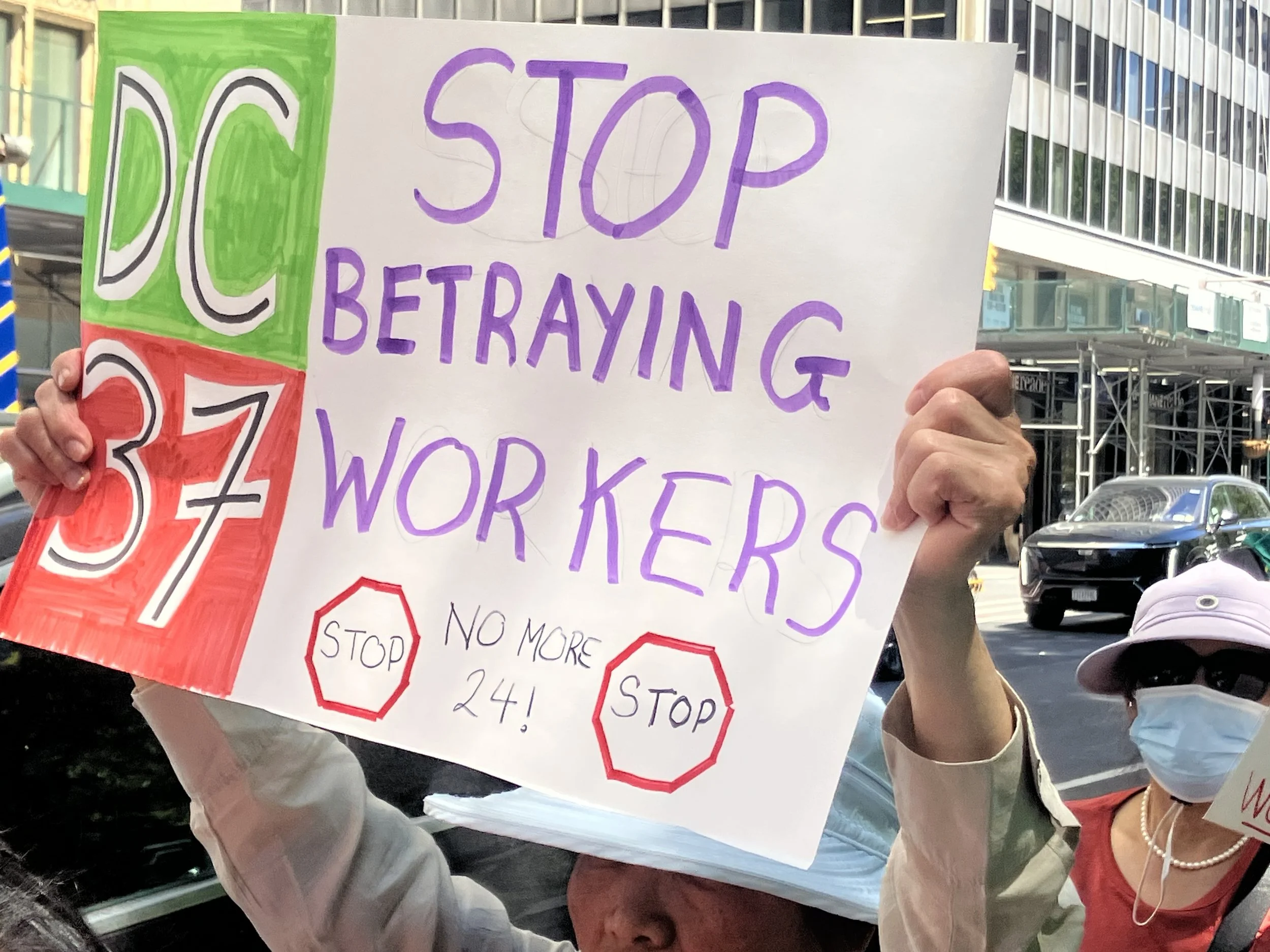
Home care workers fighting to end to the 24-hour workday called out District Council 37 leadership during opposing rallies held outside the gates of City Hall back in May. Home care workers and their allies will return to City Hall to continue pushing for passage of Intro. 303—the No More 24 bill—on Oct. 3. Photos/Joe Maniscalco
By Joe Maniscalco
After numerous street actions, including two separate hunger strikes and sit-ins, New York City home care workers fighting to end round-the-clock shifts and institutionalized wage theft in the industry will return to City Hall on Oct. 3 to continue the struggle.
They are expected to have allies, too, a growing community of fellow New Yorkers who’s integrity and sense of justice precludes them from turning a blind eye to the 24-hour workday just because it mainly impacts immigrant women of color.
Some of those advocates and allies held an open forum at the Church of the Village on W.13th over the weekend to talk about how misogyny and patriarchal attitudes about the nature of work allow the 24-hour workday to endure in New York City.
Celebrated scholar and feminist activist Silvia Federici was among the participants. Much of the discussion focused around City Council Speaker Julie Menin and how she is using her platform “not to uplift women,” but “do the opposite”—and “devalue care.”
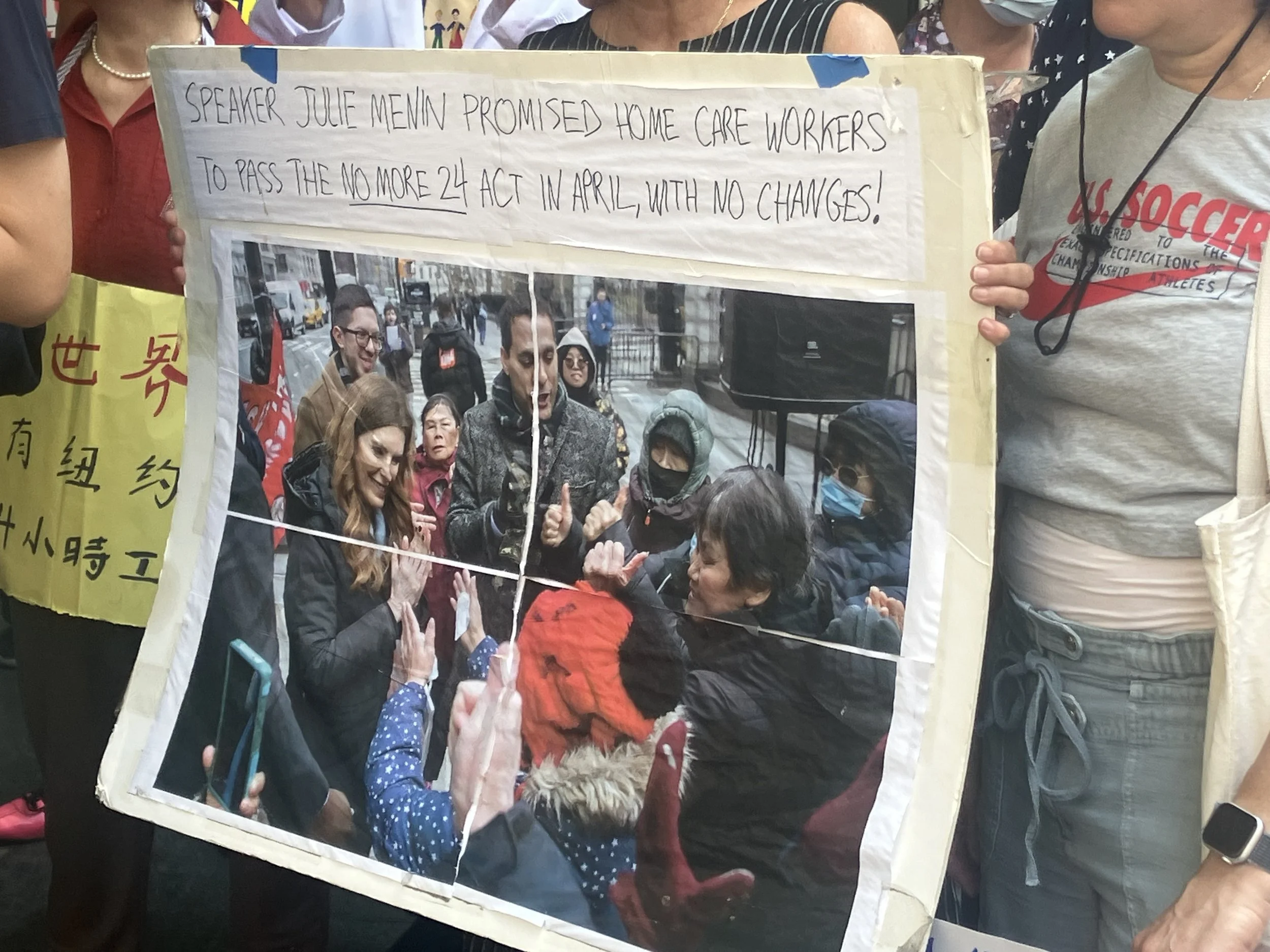
City Council Speaker Julie Menin promised home care workers back in March that Intro. 303—the “No More 24” bill would get a democratic vote. It hasn’t happened, and home workers say she broke her promise.
Speaker Menin started out her tenure earlier this year meeting with home care workers on the sidewalk outside the gates of City Hall in March and promising them Intro. 303—Council Member Chris Marte’s “No More 24” bill—would finally be allowed onto the floor for a democratic vote.
That didn’t happen.
“[Speaker Menin] has been working diligently to finalize the best version of the legislation, which is complex and requires more input from stakeholders,” a spokesperson for Menin told Work-Bites in April.
The reason it didn’t happen, however, is largely because District Council 37 Executive Director Henry Garrido, head of the largest public sector union in the city and close ally of Mayor Zohran Mamdani, didn’t want it to happen—and, in fact, vowed to “kill the bill.”
He led an ugly demonstration outside the gates of City Hall in May that wound up pitting his supporters against home care workers pushing passage of the “No More 24” bill.
“I can’t understand it—it’s beyond my comprehension. Obviously, their concept of workers’ rights is very limited. It’s limited to a point that does not push them to a clash with the institution—they don’t want to deal with it. It’s incomprehensible that the union would accept 24-hour work shifts. It’s against all the things a union is.”
“I can’t understand it,” Federici told Work-Bites on Sunday. “It’s beyond my comprehension. Obviously, their concept of workers' rights is very limited. It’s limited to a point that does not push them to a clash with the institution—they don’t want to deal with it. It’s incomprehensible that the union would accept 24-hour work shifts. It’s against all the things a union is.”
Garrido has alternately argued that the home care workers DC 37 represents in Local 389 want to work round the clock shifts to qualify for health insurance—even if they’re legally only paid for 13 hours—and that mandating split shifts would jeopardize patient care.
“They’re buying the thing that the money is fixed—and they’e not willing to fight the fact it’s been privatized,” Federici continued. “Once the money goes to the companies, the money doesn’t go to the worker. They’re not going to fight the privatization of care. They’re not going to fight the fact that there is a certain amount of Medicaid [money]—they are accepting the women’s sacrifice.”
The Chinese-American Planning Council [CPC], one of the most influential home care worker agencies in New York City, is on record supporting workers fighting to end the 24-hour workday—but insists “24-hour shifts are mandated by state law and determined by insurance companies.”

Sylvia Federici, scholar and feminist activist, expressed disbelief this weekend that any union could oppose ending the 24-hour workday.
Mayor Mamdani himself has acknowledged that institutionalized wage theft is, indeed, baked into the 24-hour workday, and said it must end.
“We know that those technical breakups of thirteen hours and eleven hours for so many workers [assigned 24-hour shifts] mean nothing—that you are working every single hour of that shift—and that must come to an end,” he told “No More 24” supporters rallying in Brooklyn prior to winning election.
By the time he actually became Mayor, however, Mamdani’s position had devolved into a much weaker and more nebulous commitment to “stronger protections for home care workers.”
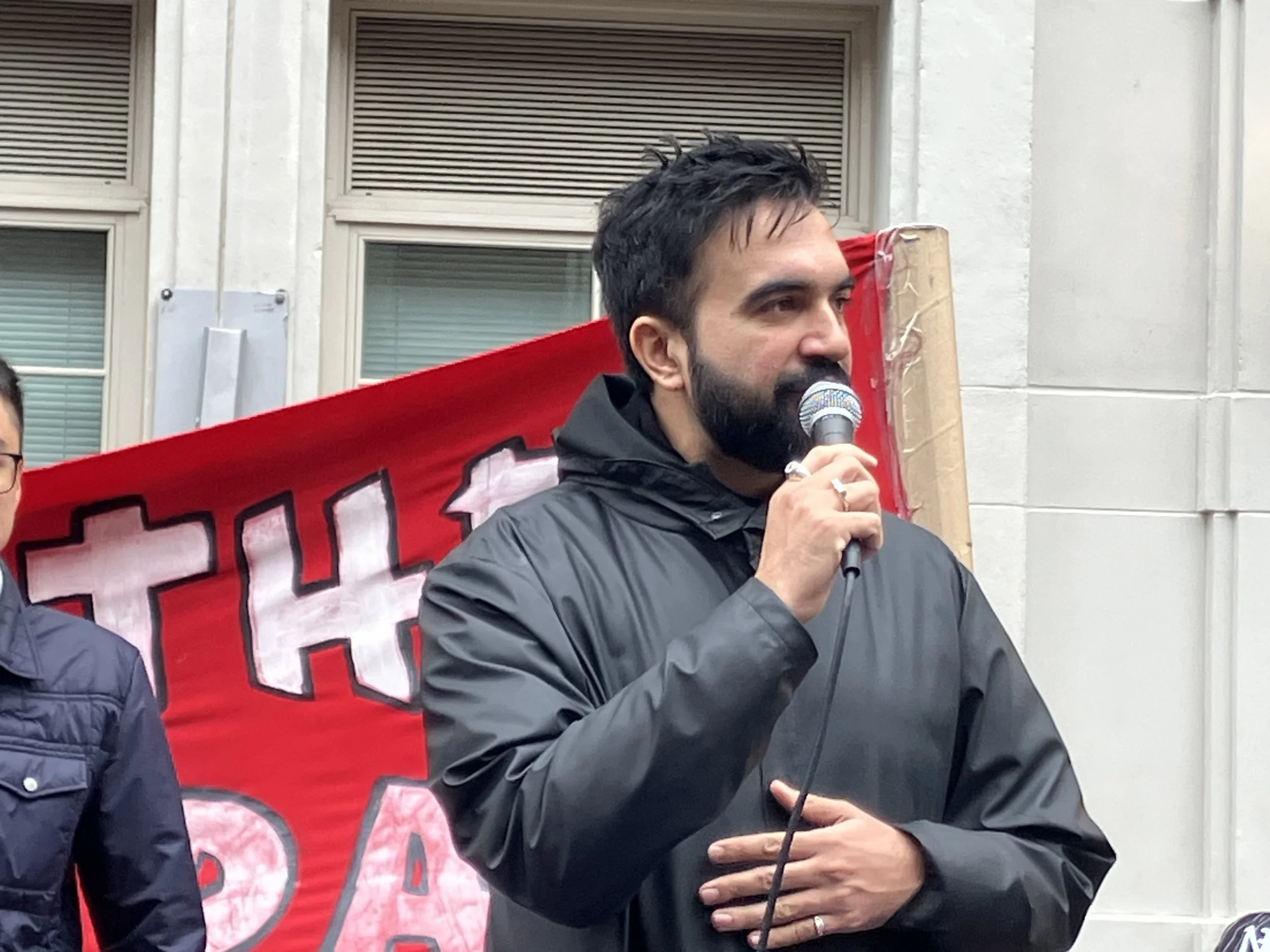
Mayor Zohran Mamdani is on record calling for an end to the legalized wage theft baked into the 24-hour workday.
In March, Cassio Mendoza, Deputy Press Secretary for Economic Justice at the Office of the Mayor, told another news outlet that Mayor Mamdani is “committed to working alongside home care workers, the Council, and the state government to pass stronger protections that improve working conditions for caregivers and ensure they can provide the high-quality care their patients deserve.”
Federici, meanwhile, called the privatization and marketization of care for the profit of a few, nothing less than “an abomination.”
How long, she wondered on Sunday, would unions survive if they told all their rank and file members that working round-the-clock shifts while only earning 13-hours pay was okay? Not long, of course.
“But they say it to women,” she said.