
‘Give Me a Chance to Survive’: Workers, Employers Dread Deportations’ Effect on Health Care
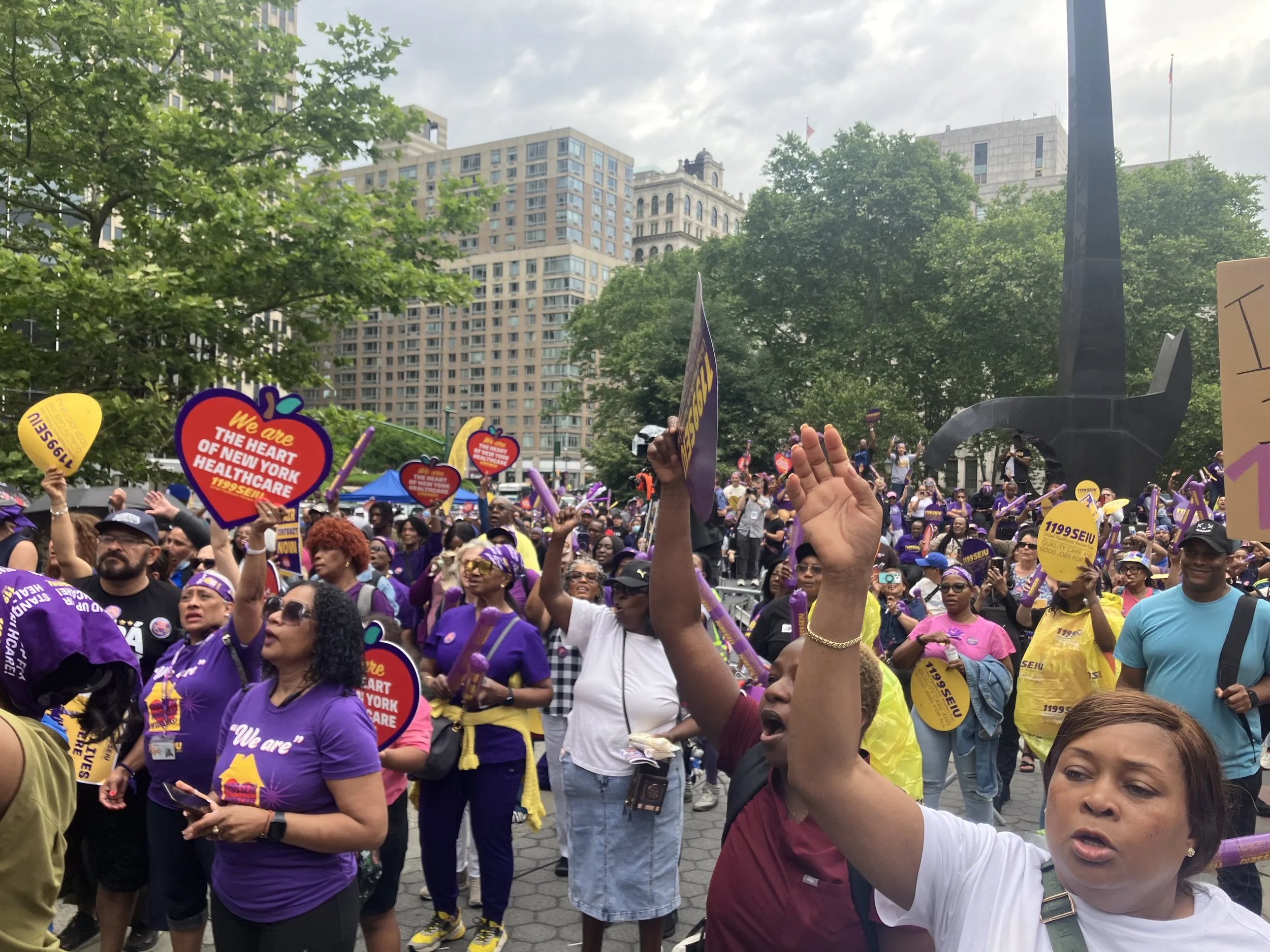
Roughly 50,000 home-care workers across the country have Temporary Protected Status [TPS] and now face deportation. Many of those workers, some seen here at a contract rally held in NYC last month, are members of 1199SEIU Healthcare Workers East—the largest healthcare union in the country. Photo/Joe Maniscalco
By Steve Wishnia
“They killed my cousin,” said the Brooklyn man, a Haitian immigrant in his 40s, explaining why he came to the United States four years ago. He asked to remain anonymous for obvious reasons.
The situation in Haiti—a catastrophic earthquake in 2010, followed by the collapse of the government and the domination of much of the country by murderous gangs—enabled him to get Temporary Protected Status [TPS] here. That meant he could stay and work legally, as a housekeeper in a nursing home, and support his family—his wife, who is pregnant, and their two children.
The Supreme Court’s June 25 decision overturning lower-court rulings that the Department of Homeland Security had improperly revoked TPS for Haiti has put all that in danger.
“I have to pay rent. I have to buy food. Losing your job means you’re nothing in this country,” he told Work-Bites. “And if you go back home, you’re going to get killed.”
The Brooklyn nursing-home worker is one of some 50,000 health-care workers in the U.S. who have TPS, 1199SEIU Executive Vice President Andy Cassagnol told a press conference at the union’s Manhattan headquarters July 10. The mass revocation of their protected status, the health-care union says, “could cause chaos in an industry already plagued with worker shortages.”

Kevin Thomas, President & CEO of the New York State Association of Health Care Providers, speaks out this week in New York City against the looming deportations of tens of thousands of health-care workers. Photo courtesy of 1199SEIU
“Without immigrants, you will not have nurses,” said Nancy Hagans, president of the New York State Nurses Association [NYSNA], who is also a Haitian immigrant. “You will not have licensed practical nurses. You will not have certified nursing assistants. You will not have home-care workers.”
She called the Trump administration’s war on immigrants “a racially motivated attack” with “no thought given to the lives they built here and the contributions they make.”
Employers expressed similar sentiments. “We are talking about the person who has bathed the same 88-year-old woman for six years,” said former Long Island state senator Kevin Thomas, now head of the New York State Association of Health Care Providers, a trade group for home-care agencies. He called revoking TPS “as cruel as it is reckless.” And the price, he added, will be paid by the “grandma in the Bronx who now has no one to help her get out of bed.”
Jessica Pizzutello, CEO of The ARC Rockland, which provides services for people with intellectual and developmental disabilities in Rockland County, said the agency has already lost “twenty talented, trusted employees” this year because of the immigration crackdown, and she expects to lose another 19 if the revocation of TPS for Haitians goes into effect. Federal leaders, she continued, should “recognize the unintended consequences.”
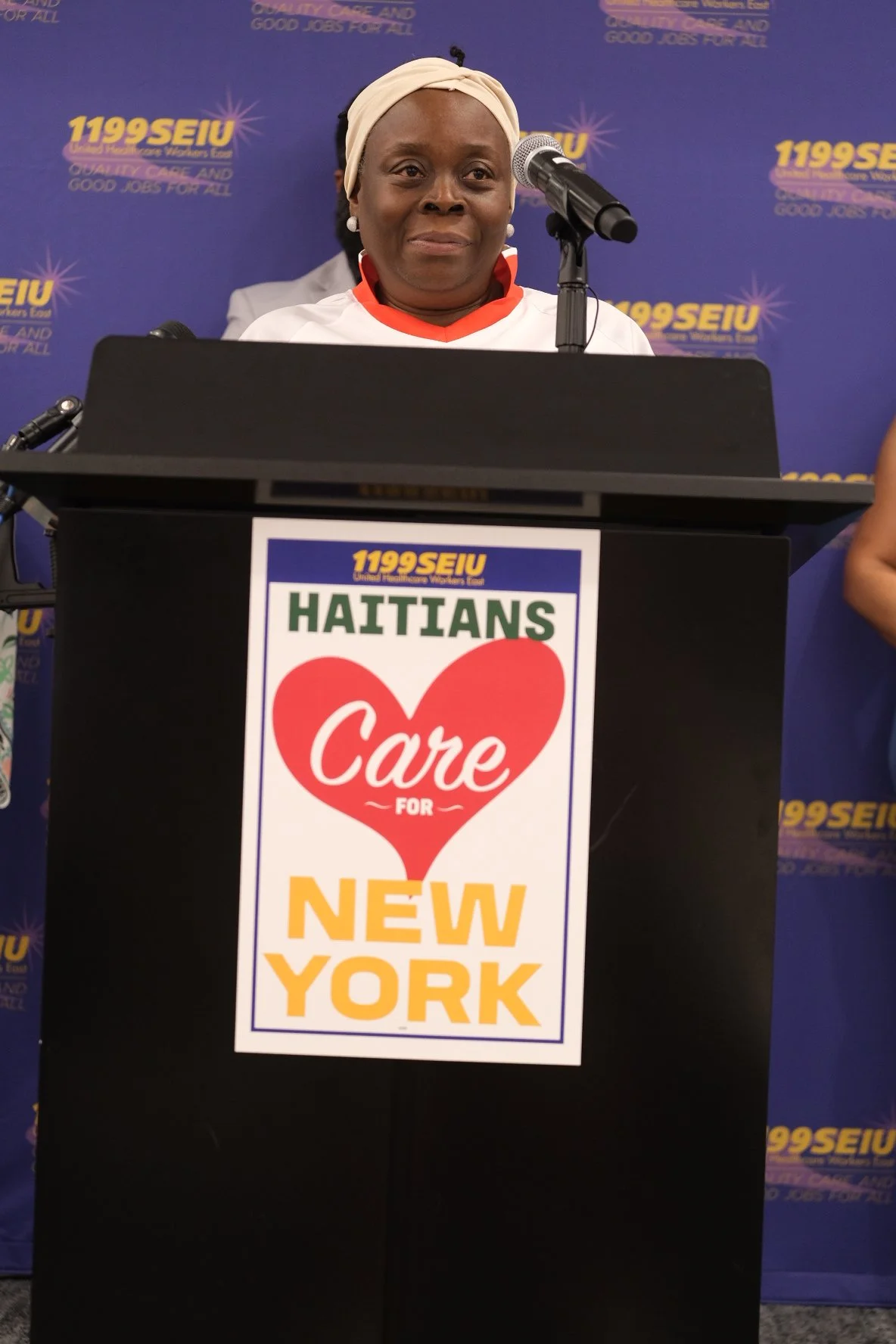
Union delegate and Certified Nursing Assistant Geneveve Artamin attended Friday’s speak out in New York City with a fellow 1199er who holds Temporary Protective Status but now fears deportation. Photo courtesy of 1199SEIU
Sabine French said that her 91-year-old mother is “terrified” that the aide who takes care of her, a Haitian immigrant in her sixties, will be forced to leave. She said having the aide as “another set of legs and eyes” has enabled her mother to continue living in her Cambria Heights home.
Congress must act, she added.
“I get up early in the morning. I take two buses to get to work. I make sure the residents have fresh linen. Everything to be clean. I give my heart,” the nursing-home housekeeper told the reporters and supporters. “I want to stay in New York where I can be safe. I cannot go to Haiti. It is not safe.”
In announcing her plans to revoke TPS for Haitians last November, then Secretary of Homeland Security Kristi Noem said the country was safe for immigrants to return to, even though the State Department warns that it is too dangerous for Americans to visit. Justice Alito, who wrote the decision, said that was not a problem: If the Secretary of Homeland Security decided to revoke TPS for a country after flipping a coin, he argued, that would be legal, and the courts would have no jurisdiction to interfere.
Justice Alito also insisted that the government’s revocation of TPS was not racially motivated—that Donald Trump’s statements that Haitians were eating people’s cats and “poisoning the blood” of the country were “racially neutral.”
“Pray for the person who has TPS,” the nursing-home housekeeper told Work-Bites. “We help this country. We pay taxes. Give me a chance to survive.”