
SCOTUS Legalizes Trump Purge of Federal Agencies—What That Means For U.S. Workers
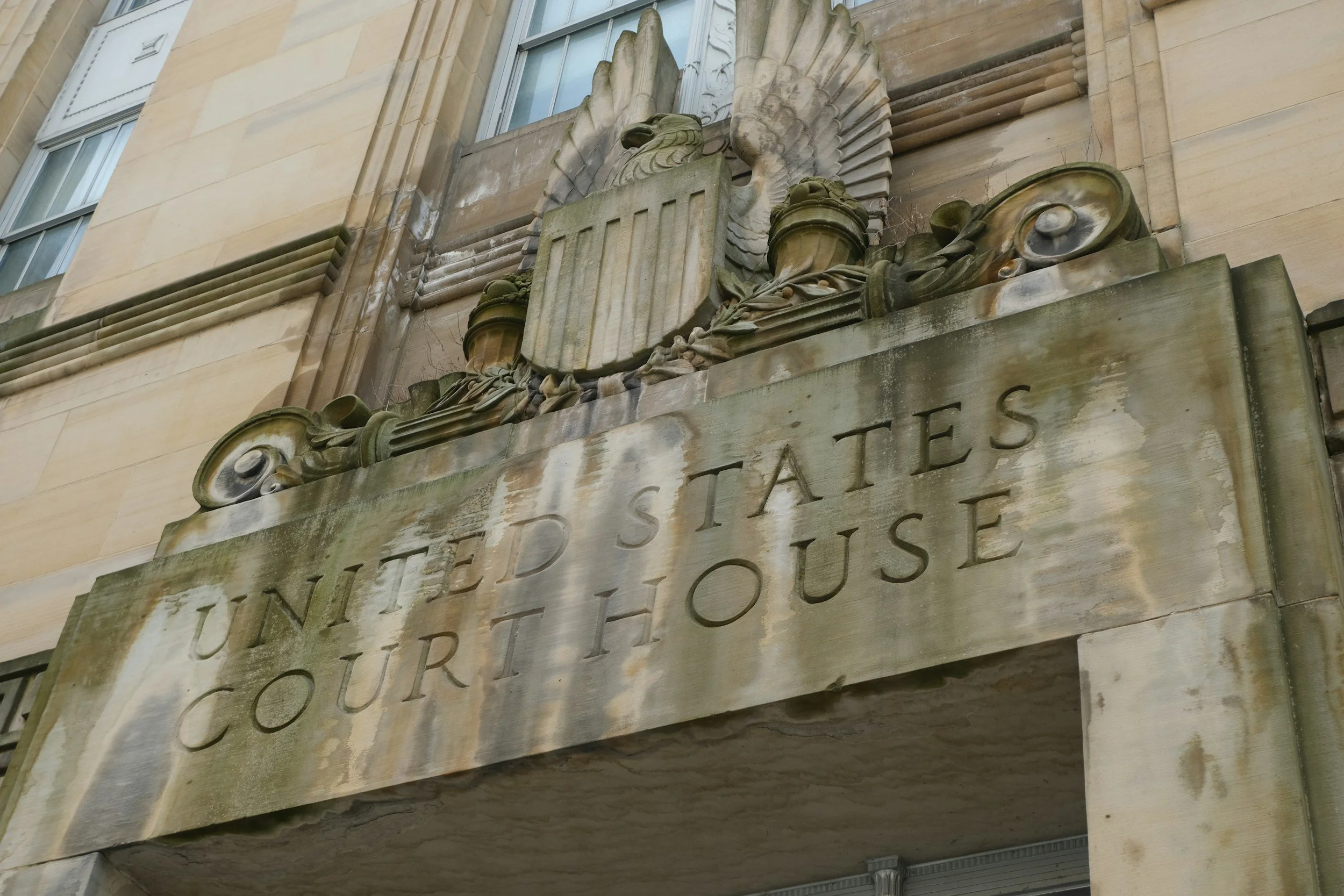
“If [potential targets] don’t do what Trump likes, he can start firing people,” former NLRB attorney and current labor-law professor Anne Lofaso tells Work-Bites.
By Steve Wishnia
The Supreme Court ruled June 29 that it was an unconstitutional limitation on the President’s powers for Congress to establish independent agencies whose officials can’t be fired without cause, such as the Federal Trade Commission and the National Labor Relations Board.
The 6-3 decision, split along the usual ideological and party lines, legalizes Donald Trump’s purge of officials at those agencies whose terms had not yet expired, including FTC members Rebecca Slaughter and Alvaro Bedoya, NLRB chair Gwynne Wilcox, and two Equal Employment Opportunity Commission members. It applies to about two dozen agencies, including the Federal Communications Commission and the Federal Labor Relations Authority, the analogue to the NLRB for federal employees.
The ruling upends a system of independent agencies that goes back almost 140 years, since the Interstate Commerce Commission was established in 1887 to rein in railroad monopolies, and became an integral part of the federal government during the New Deal, said former NLRB attorney Anne Lofaso.
“We’ve had this model for a long time—90 years of how we ran a government fairly successful,” Lofaso, now a labor-law professor at the University of Cincinnati College of Law, told Work-Bites. Now, “there’s more and more power concentrated in one person,” and consequently, “no democratic accountability.”
The AFL-CIO condemned the decision.
“Giving Trump the power to hand-pick political loyalists to decide those cases—and carry out his own anti-worker agenda—corrupts the entire process.””
The independence of the NLRB, the Federal Labor Relations Authority, and the National Mediation Board is central to their mission of “protecting the fundamental rights of workers to organize on the job free of political interference,” federation President Liz Shuler said in a statement. “Today’s ruling threatens their independence and ensures that every future member of these boards will wonder whether the president is watching over their shoulders, ready to try to fire them for any ruling they disagree with. Giving Trump the power to hand-pick political loyalists to decide those cases—and carry out his own anti-worker agenda—corrupts the entire process.”
“Congress established the NLRB as an independent agency so that decisions about workers' rights would be guided by the National Labor Relations Act and the facts before the Board, rather than by shifting political pressures. The Court's ruling changes that longstanding framework,” National Employment Law Project head Rebecca Dixon said in a statement to Work-Bites.
Chief Justice John Roberts, who wrote the majority opinion, had long been itching to overturn the Court precedent that prohibited the President from firing officials at independent agencies, a 1935 decision called Humphrey’s Executor. The lower federal courts that ruled Rebecca Slaughter was illegally sacked cited it.
Roberts’ opinion held that the power to remove subordinates is “vested in the President alone.” He cited a 1926 case, Myers v. United States, which upheld President Woodrow Wilson’s firing of a postmaster in Portland, Oregon. It said the President has “the power of appointment and removal of executive officers” and struck down an 1876 law that said the President had to receive permission from the Senate both to appoint postmasters and to remove them.
However, when President Franklin D. Roosevelt fired FTC member William E. Humphrey, a holdover appointed by President Herbert Hoover, he ran afoul of the law that created the FTC in 1914: Commission members were appointed to seven-year terms and could be removed only “for inefficiency, neglect of duty, or malfeasance in office.” In Humphrey’s, the Court held that the FTC and similar panels were “expert” agencies that were “neither political nor executive, but predominantly quasi-judicial and quasi-legislative.”
Roberts—a partisan of the “unitary executive” theory, that Article II of the Constitution invests executive power solely in the President, the one elected member of the executive branch—argued that agency functions such as enforcing the law and interpreting detailed regulations were essentially executive, and that Congress giving them independence from the President constituted “legislative vetoes.”
“If Congress wishes to establish independent agencies to assist it with its functions, it may do so. But it may not foist those agencies upon the President, and thus deprive him of ‘the executive power vested by the Constitution’,” the Chief Justice wrote. “Although it is up to the Senate to decide whether to confirm those with whom the President would prefer to work, neither Congress nor the courts may saddle him with those with whom he cannot work. Subordinates who exercise the President’s power are subject to removal by him. Then, and only then, can they remain accountable to the President, and the President to the people.”
Justice Sonia Sotomayor, dissenting, called the majority’s ruling “grievously wrong.” “Nothing in the text of the Constitution, as understood at the time of the founding by those who ratified it, suggests the illimitable removal power the Court today endorses,” she wrote. “For most of this nation’s history, Congress and the President together have decided that some government functions should operate at a distance from partisan politics.”
“Constructing agencies headed by bipartisan, multimember panels with for-cause removal protections has enabled them to address complex problems while enjoying some independence from presidential removal and thus absolute partisan control,” Sotomayor continued. “Today, this Court undoes centuries of political practice and concludes that all three branches of government have been acting in open defiance of the Constitution all this time.”
The Humphrey’s decision was crucial to the establishment of the NLRB in 1935, as Congress amended the bill creating it to include removal protections, she continued. Without those protections, “bipartisan-appointment requirements can easily be evaded simply by firing all commissioners of the opposite party,” and “lengthy fixed terms, aimed at ensuring stability, continuity, and the development of expertise within an agency, can also be cut short at the President’s will”—both of which have already happened at the FTC, she said.
The Court’s majority, Justice Sotomayor concluded, was discarding a democratic regime “in favor of one that distorts the structure of government to fit the majority’s theory of unitary, total executive control. The result is a President who emerges with far greater power than ever before. It is a power, however, that neither the people, nor Congress, nor the Constitution bestowed upon him.”
In practice, NELP’s Dixon said, the decision is likely to make the NLRB’s composition “more closely tied to changes in presidential administrations.” That, she added, “could mean greater instability and more frequent shifts in labor-law doctrine,” particularly on “issues that have historically changed across administrations, such as joint-employer standards, election procedures, and available remedies.”
It will certainly sink Gwynne Wilcox’s case challenging her ouster, Lofaso told Work-Bites. And it’s “very likely that this is going to go down deeper.” Potential targets might include NLRB regional directors, other senior executives—many of whom are “career people” who came up through the ranks—and its administrative law judges, already targets of lawsuits by Elon Musk and Amazon.
“If they don’t do what Trump likes, he can start firing people,” she said.