
Rapacious RAB Looks to Torpedo 32BJ—Union Strike Vote Set For 4/15
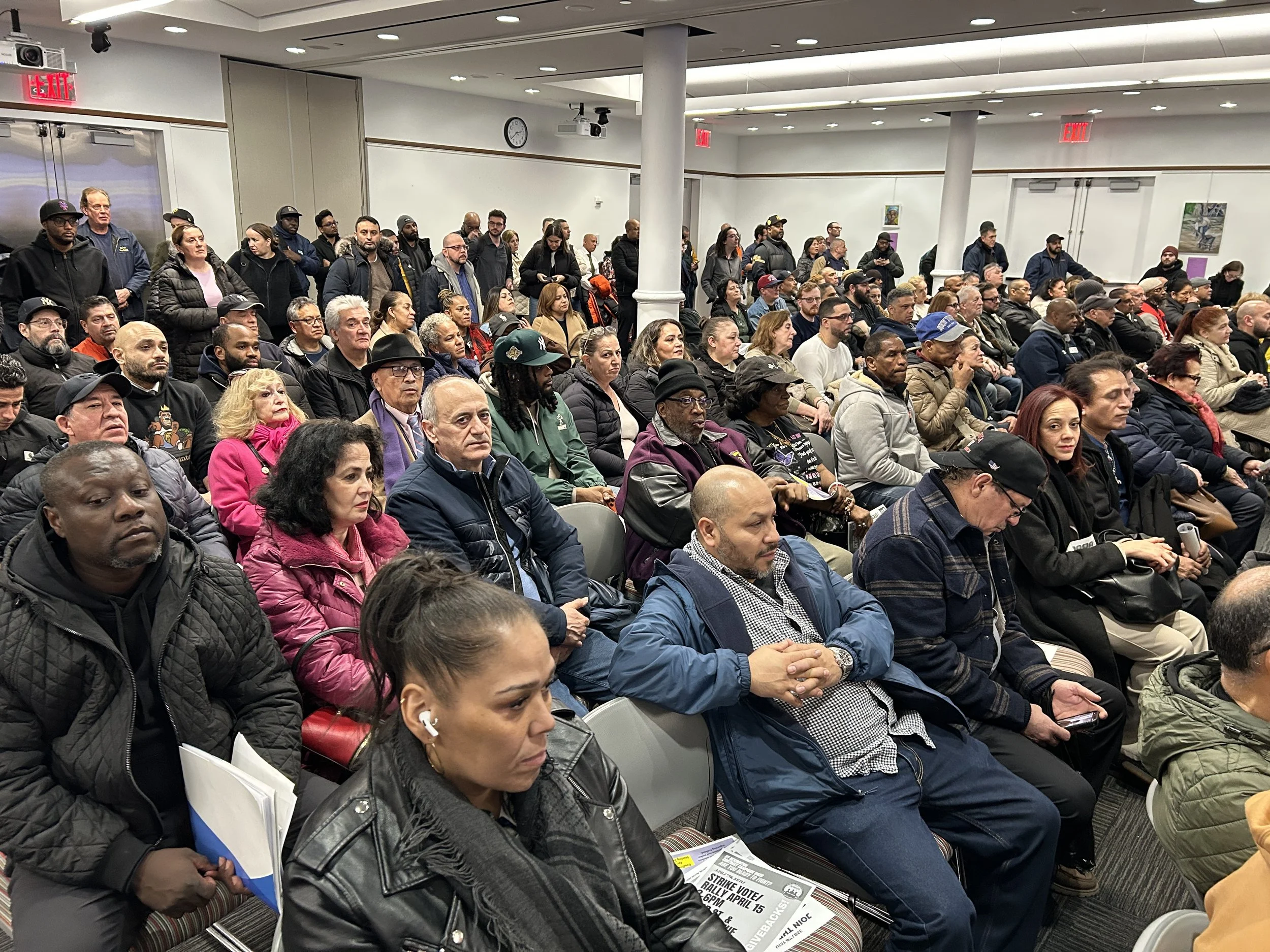
32BJ has begun “mobilizing and preparing” for a possible strike, with 1,400 members signed up as strike captains. Photos courtesy of 32BJ
By Steve Wishnia
Claiming that a potential rent freeze is an “existential threat” to the real-estate industry, the trade group negotiating with residential building-service workers is seeking a two-tier contract that would pay future workers 25% less—which 32BJ SEIU union President Manny Pastreich called “disappointing and insulting.”
“We are hopeful both sides will recognize and confront the realities facing the industry,” Howard Rothschild, president of the Realty Advisory Board on Labor Relations (RAB), the group representing building owners, said in a statement. “These include a likely imposition of 0% rent increases on 1 million rent-stabilized New York City apartments and individuals living in co-ops and condos struggling with high tax burdens and increased common charges.”
32BJ has scheduled a strike-authorization vote for April 15, five days before the contract covering 34,000 workers expires. They work in more than 3,000 residential buildings in Manhattan, Brooklyn, Queens, and Staten Island. The Bronx is under a separate agreement.
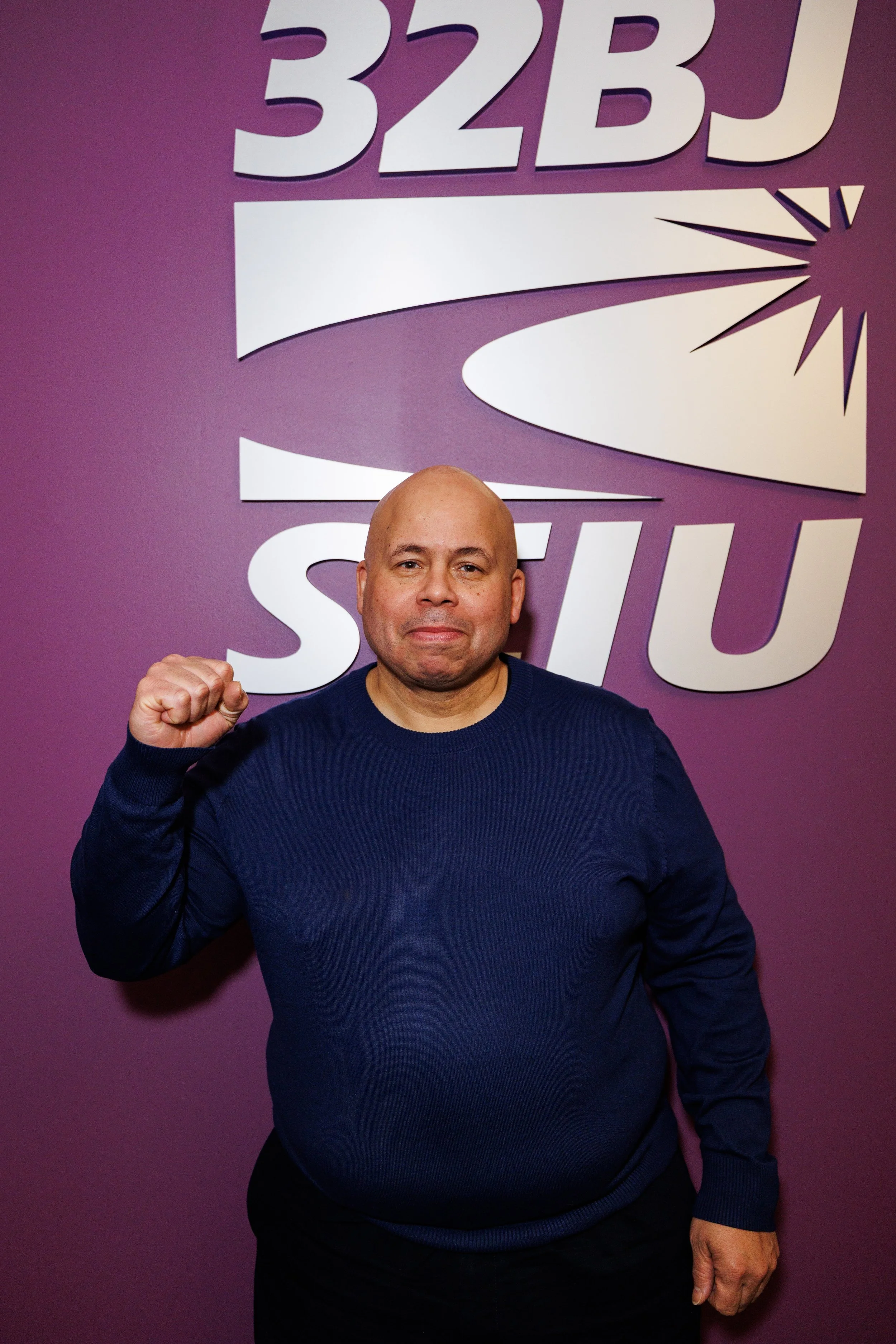
“If the RAB doesn’t come in good faith, we’re going to walk.” — Felix Figueroa, 32BJ
The union says the three most objectionable parts of the RAB’s proposal are that it would require workers to pay health-care premiums, that it would pay workers hired after April 20 75% of what current workers get, and that it would freeze pension payments.
The two-tier contract would create a situation where some people are getting paid 25% less for doing the same work, said bargaining-committee member Felix Figueroa, who’s been a doorman in an Upper West Side building for 39 years. “We’re not going to have that,” he told Work-Bites after the March 30 bargaining session. “That breaks the union.”
Under the current contract, wages range from $29.78 an hour for doorpersons and porters to $43 for superintendents and resident managers. Their health benefits include medical, dental, optical, and prescription-drug coverage for their families, with all insurance premiums paid by the employer.
The RAB argues that is too costly. It claims that for a doorperson or porter earning $62,000 a year, “the total annual cost to the employer exceeds $112,000.” It says that charging workers part of their premiums would be fair because “only 5% of U.S. employees that do not contribute anything for family health-care premiums,” and “the average U.S. employee pays over $6,850.”
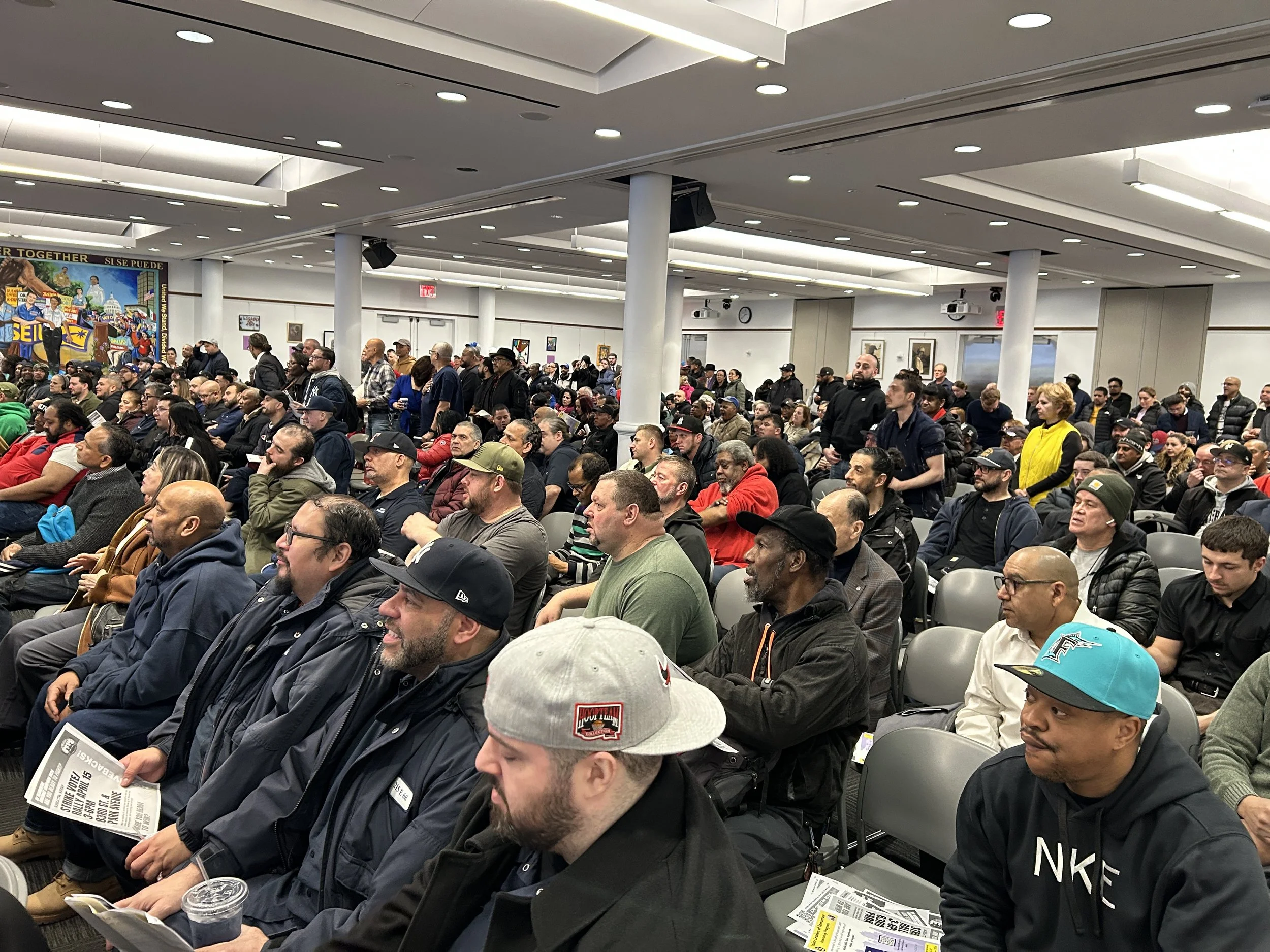
Many hard-pressed building service workers are already hesitant to retire, because “they’re afraid they’re going to have to get another job to keep up with inflation.”
“We won’t let the thriving real-estate industry raise health-care costs, jeopardize retirement security, and undermine the core fabric of a labor contract that thousands of working families depend on,” Pastreich responded in a statement.
Figueroa says paying for health-care premiums is “non-negotiable.” Workers are already struggling with bills, he says, and copays for basic doctor visits are $40.
“We need affordable health care for our families,” he says: The union’s plan paid for his son’s eye surgery and medications.
They also need an increase in pensions, he adds. Many members are hesitant to retire, because “they’re afraid they’re going to have to get another job to keep up with inflation, he says. “I’ve got guys who retired two years ago doing part-time work.”
The union won a 10% increase in pension payments in the contract for commercial-building cleaners negotiated in December 2023. That also applied to residential workers, the union said at the time, and raised payments by up to $140 a month—which would bring the highest pensions up to about $1,540 a month.
The RAB had also demanded health-care premiums and a two-tier contract in those talks, but dropped them in a deal reached just before the strike deadline. In March 2024, the Bronx RAB, which negotiates separate contracts and pays lower wages, announced that it wanted to reopen the previous year’s contract, seeking premium-sharing and a wage freeze. It decided not to reopen the contract after workers authorized a strike.
32BJ has begun “mobilizing and preparing” for a possible strike, with 1,400 members signed up as strike captains.
“If the RAB doesn’t come in good faith, we’re going to walk,” Figueroa says.