
The Decline of Union Membership and Lessons From the Past
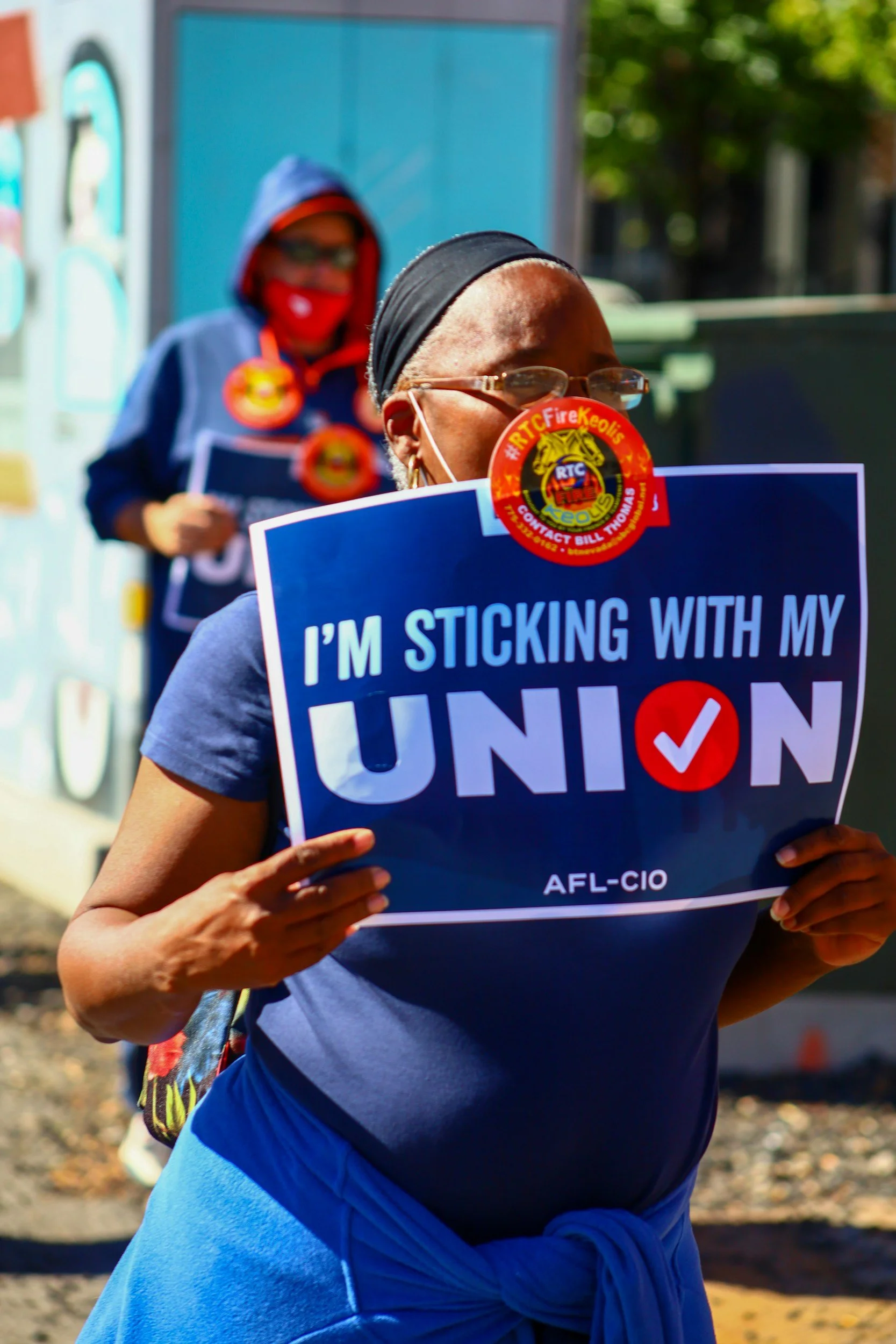
By 2024, only about 11% of U.S. workers were in unions, down from the year before. Of those workers who were in unions, a little more than a third were public-sector workers, and less than 7% were private-sector workers.
By Bill Barry
Editor’s Note: This column is reposed here with permission of the author.
At a high point of membership in 1957, 37% of the U.S. workforce was in a union. More importantly, for non-union workers, about 40% of them enjoyed union conditions thanks to what analysts call “the spillover effect.” As unions raised workplace standards, employers had to keep up. While there were cultural conflicts about breadwinners and breadmakers, many households had one-income families with good wages, fully paid health insurance, defined benefit pensions, and a secure future.
By 2024, only about 11% of U.S. workers were in unions, down from the year before. Of those workers who were in unions, a little more than a third were public-sector workers, and less than 7% were private-sector workers.
According to columnist Anna Bernasek, “A generation ago, labor unions were often a familiar feature of the American workplace, but in private businesses across the country, unions have been shrinking.” Over the years, union membership dramatically reduced into a few states: In 2024, about 29% of union members lived in California and New York. However, these two states accounted for 17% of wage and salary employment nationally.
Spillover in Reverse
We are again experiencing an opposite “spillover effect”: non-unionized companies are setting conditions for union workers, including lower wages, tiers, health insurance copays, and no pensions.
To illustrate how far standards have declined as union density diminished, below is a list of the 10 largest employers in the U.S. and how many workers they employ.
Federal government: 2.7 million
Wal-Mart: 1.5 million (also the company with the largest revenue in the world)
McDonald’s: 420,000 ($80 million of revenue per day worldwide)
Kroger: 400,000 (nearly 3,000 stores and the third-largest retailer in the world)
IBM: 377,000
Home Depot: 371,000
UPS: 362,000
Target: 347,000 (nearly 2,000 Target stores in the U.S.)
Amazon: 321,000
Berkshire Hathaway: 316,000 (largest financial services company in the world by revenue, worth over $200 billion)
Except for UPS, Kroger, and some of the railroads owned by Berkshire Hathaway, the private companies listed above are totally non-union. Even worse, there are no national organizing campaigns at any of them. Though the retail sector is the largest employer by sector in the country, just four percent of retail workers belong to a union, according to the Bureau of Labor Statistics.
How Did Union Density Decline?
The union movement made a significant shift in the late 1930s to what historians call the servicing model, in which union officers, rather than rank-and-file workers, set union strategy and decide how to spend union funds. Officers can focus on delivering benefits to members in order to keep themselves in office at the expense of new organizing. Organizing new shops at competing businesses, for example, delivers benefits to members in greater numbers in the long term. Failure or refusal to focus on new organizing greatly contributed the low level of union density today and with it diminished union contracts.
At the same time, while the U.S. was gearing up its defense industries, workers exerted pressure on the government to protect unions. Proponents of the National Labor Relations Act argued at the time that it would give workers the right to organize, but workers have always come together to fight for themselves, whether or not the government recognized it as their right.
Workers’ intense organizing efforts of the 1930s emphasized self-help: they organized to make their lives better. They engaged in nationwide strikes, sit-down strikes, work stoppages over grievances, and radical political campaigns, forcing the government to create a structure to control this movement.
Shortcomings of the Legal Solution
Since that time, union officers and organizers have come to depend on legal protections, shifting union strategy in a more cautious and less confrontational direction. This expectation of government recognition spread to non-union workers who began to look at the government and not at organizing a union as the solution for their problems. During the 2024 election, Boston mayor Michelle Wu said, “People are hungry for government to work and to get things done that matter and that will make a difference in their lives.”
Of course, the bosses have been organizing, both socially and politically, to block any growth of union membership. Bosses’ attitudes toward unions grew more hostile during the 1960s, moving from acceptance to active opposition. A whole industry of “union-busters,” as Martin Levitt called himself, developed to challenge every organizing campaign. Federal and state legislatures passed laws curbing union power, and politicians like Ronald Reagan, Donald Trump, and Scott Walker were elected as union busters with substantial support from union voters.
Until the Taft–Hartley Act passed in 1947, every state allowed workers to negotiate a “union shop” agreement, so that everyone in the workplace had to belong to the union. Now, 28 states allow for so-called “open shops” where union membership is voluntary, and a Supreme Court decision in 2018, Janus v. AFSCME, blocked unions from collecting agency fees — money paid to the union instead of dues by workers who do not want to join.
Of course, our union officers have the Excuse-O-Meter turned on high and rather than looking at our movement like a coach looks at game tape after a bad loss. They kept hoping that the old strategies would be successful, but they have not been.
Lessons from the AFL-CIO
The major union federation, the AFL-CIO has started occasional campaigns to increase new organizing, and in 1995, it was the issue that upset the ossified structure.
John Sweeny’s Challenge
For 100 years, no one challenged the presidency of the AFL-CIO. Then the passage of the North American Free Trade Agreement (NAFTA) in 1993, and the first Republican congressional majority in 40 years the year after, pushed a group of national union officers to action. They argued that the AFL-CIO needed to adopt a more aggressive posture and supported SEIU president John Sweeney, a challenger to Lane Kirkland’s successor, Tom Donahue, for the presidency of the AFL-CIO in 1995.
Sweeney’s “New Voice” campaign proposed changes based on the premise that “the most critical challenge facing unions today is organizing,” and called upon national unions to “organize at a pace and scale that is unprecedented.” With organizing at the top of the agenda, the subsequent victory of Sweeney’s slate was widely interpreted as an endorsement of this priority. In 1996, the AFL-CIO released “Organizing for Change, Changing to Organize,” a report that called upon union officers to take risks and make the dramatic changes necessary to succeed at organizing. It identified four keys to winning
Devote more resources to organizing
Develop a strong organizing staff
Devise and implement a strategic plan
Mobilize your membership around organizing
New Organizing Realized
As the AFL-CIO began to push new organizing, Jane Slaughter summarized it this way:
Some [central labor councils] have used the AFL-CIO’s MEMO training — Membership Education and Mobilization for Organizing. This approach says that rather than unions simply assigning staffers to organize, members should be involved. And the federation is using moral suasion to get locals and internationals to commit thirty percent of their budgets to recruitment.
At the Washington State Labor Council convention in September 1996, for example, stickers reading “30% by the year 2000” were distributed. Delegates signed a petition endorsing Sweeney’s call for thirty percent across the board. In Sweeney’s old union, SEIU, if locals commit certain percentages of their budgets to organizing, they receive a dues rebate.
In a similar move, the officers of The Amalgamated Clothing & Textile Workers (ACTWU) changed the union constitution to require that every division commit a fixed percentage of revenue to new organizing. If a district failed to do so, the international would take the money and send to a more aggressive region that was organizing.
In 1989, the AFL-CIO founded the Organizing Institute (OI) to train both union members and college recruits in organizing skills. By the mid-1990’s, hundreds of new organizers had been trained and placed into campaigns.
Outcomes for the AFL-CIO
Unfortunately, this whole movement flopped in the face of resistance from international union officers. In Prof. Richard Hurd’s book “Trade Unions and Democracy: Strategies and Perspectives,” he writes:
“[Union] leaders at all levels are cautious. Even if they agree that recruitment is important they will pull back if they sense resistance from union members. This is especially a problem at the local level and in those instances where the leader has no personal expertise in organizing. Union staff also may be recalcitrant; though few will openly challenge leaders that promote organizing, those assigned to representation express pessimism and resent the increased workload that typically accompanies resource reallocation.”
In 2000, Sweeney persuaded the AFL-CIO Executive Council to commit to organizing one million new members every year. It did not happen.
New Organizing is Key
We must revive this commitment of resources today and commit union dollars. This means union officers and members have to create a list of targets, with a schedule, staff, skills and financing. Depending on politicians, like Joe Biden, the “most pro-union president in history,” is a failure. After all, union membership continued declining during his administration.
In 2024, unions spent about $280 million on politics. What if this money had been designated for new organizing campaigns?
Zohran Mamdani recently won the mayoral election in New York, claiming more than 100,000 volunteers knocking more than 400,000 doors across the city. What if each of those volunteers went into work the next day to talk with their co-workers about a union campaign?
Creating organizing campaigns and a union movement is a responsibility for every member because we will see the benefits in better contracts. Union members can advocate at every union meeting for their union’s officers to begin or build up new organizing programs. Without this pressure, officers can remain focused on protecting themselves and their salaries rather than building a movement, and our numbers, and our bargaining power, will continue to decline.
Bill Barry is a retired organizer and the author of "From First Contact to First Contract: a Union Organizers Handbook."