
Artificial Intelligence: Just the Latest Way to Rip Off Recording Artists…
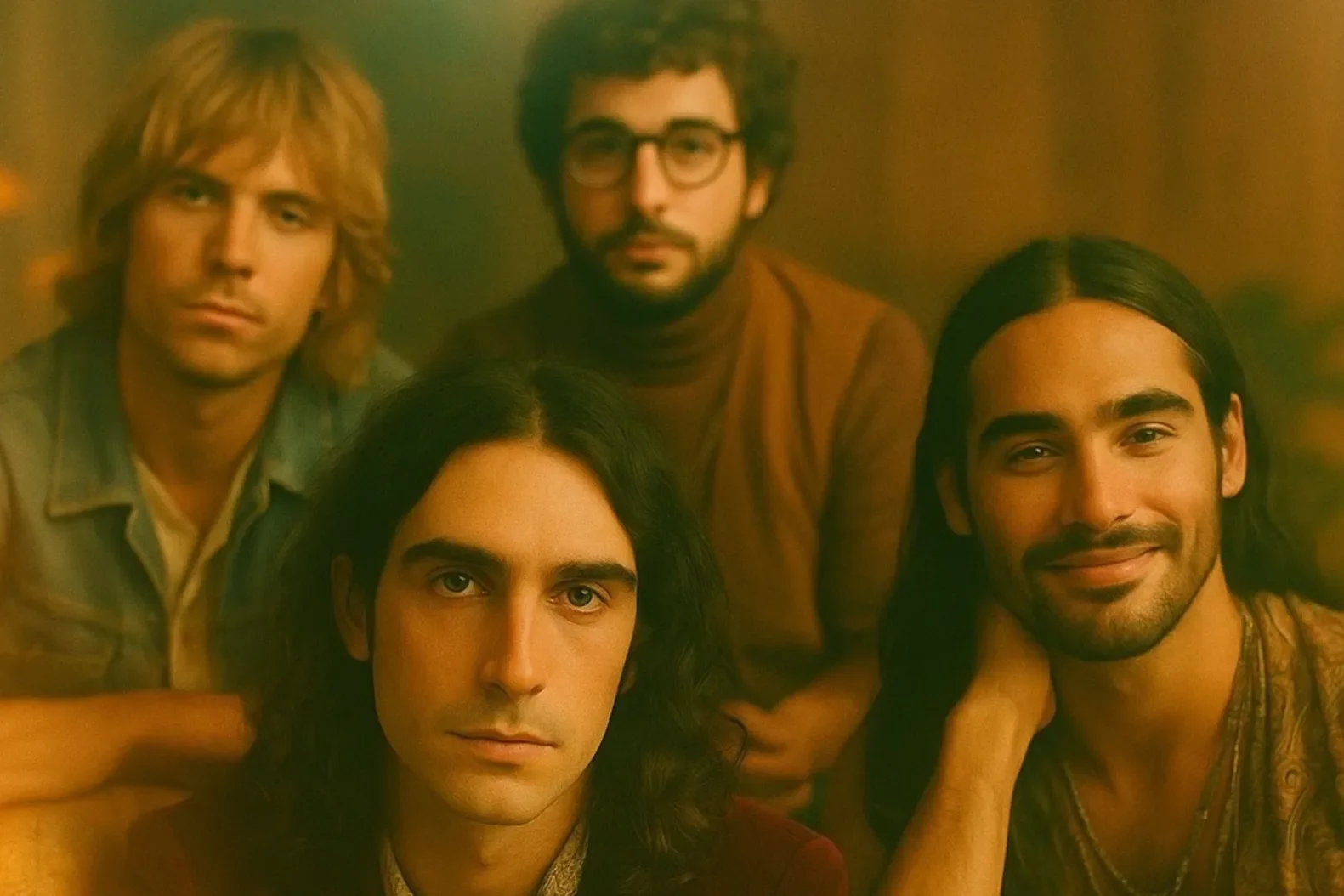
The Velvet Sundown’s “members” are all AI-generated fakes.
By Steve Wishnia
As artificial intelligence expands its share of recorded music, musicians need to establish their rights to “consent, compensation, and credit” when their work is used, an American Federation of Musicians spokesperson recently told Work-Bites.
In June, the AFM filed a lawsuit against three major record labels in federal court in Manhattan, alleging that they licensed recordings by its members to two AI companies that used the music to train their software to produce better imitations “without compensation or credit” for the artists who made them. It said the three—Warner Records, Atlantic Recording, and Universal Music Group—had also “refused to provide information to the AFM about which recordings and whose work is being licensed.”
The union also charges that after the three companies had settled their 2024 suit against the AI companies Suno and Udio for unauthorized use of their recordings, they agreed to a licensing deal with them—and then did not pay the artists for that use of their work.
“We are united by one belief—that the people who create music should have a voice in shaping its future,” Jen Jacobsen of the Artists Rights Alliance told an online seminar Aug. 7. As major recording companies and music publishers make AI deals, she added, “the problem is a huge part of our community is being left out of that process.”
The decisions are being made by “the largest players in the room,” added North Carolina Americana singer-songwriter Tift Merritt.
The music-streaming platform Deezer said in April that it “is now receiving almost 75,000 AI-generated tracks per day, representing roughly 44% of the daily uploads.” The uses of AI include training software to produce passable versions of music in certain styles or resembling specific songs. Udio’s forthcoming “Starstruck” platform would enable users to rework artists’ records in “Cover,” “Reimagine,” “Remix,” and “Create” modes, to recreate them in a different style, with an imitation of another singer’s voice, or use a singer’s voice on their own lyrics. Udio has said those versions would be owned by the artist, their label, or their music publisher—but there are questions about whether the ability to enforce that would keep up with technology.
AI is also being used to create fictitious artists, such as “Xania Monet,” a virtual R&B and gospel singer who had accumulated 44.4 million U.S. streams as of last November. The AI-created faux acoustic-electric rock band “the Velvet Sundown” claimed 1.4 million listeners on Spotify last year with an album called “Dust on the Wind”—one letter away from copying prog-rock band Kansas’ 1977 hit “Dust in the Wind.” “Bertha Mae Lightning,” purportedly a long-lost 1950s blues singer, came with ersatz sepia-toned album-cover images. “Rhoda Hardcok,” whose AI-created image resembles a cartoon Dolly Parton with silicone implants, offers lewd country parodies that are bannered on YouTube as “banned ’70s songs.”
Spotify announced Aug. 11 that it would begin tagging admitted or suspected AI creations with an “AI persona” badge next month, and not recommend them with its algorithms.
The Protect Working Musicians Act, introduced in June by Rep. Deborah K. Ross (D-N.C.), would give an exemption from federal antitrust law to musicians, producers, and songwriters who make less than $1 million a year from licensing revenues. That would allow them to bargain collectively with “dominant streaming platforms and artificial intelligence developers.” The bill says those platforms use their market power to “essentially dictate a price to music creators. If music creators do not agree to licensing terms, the online platforms profit from unlicensed uploads of music anyway.”
The exemption is necessary because antitrust law deems collective bargaining by workers defined as independent contractors, from musicians to Uber drivers, “restraint of trade.” That is “so ironic” when used by tech corporations, Rep. Ross told the Aug. 7 panel.
Spotify typically pays artists between 0.3¢ and 0.5¢ per stream. Apple Music pays 0.6¢ to 1¢, while Amazon Music pays 0.4¢ and YouTube less than 0.2¢. Tift Merritt quipped that she’d need 10 million streams to make back what she spent recording her most recent album.
Twenty years ago, Apple’s iTunes charged users 99 cents to download a song, with the artist and their record label getting 33¢ each.

“Xania Monet” is also fake.
Bassist Marta Bradley, a member of AFM Local 4543 in Baltimore, said that the biggest imbalance of leverage comes when independent musicians have to negotiate with a company one at a time: They can’t afford to hire teams of lawyers, and if they don’t like the terms of a deal, “the only option is to walk away.”
The bill, however, is not going anywhere in Congress this session, as it has only three cosponsors. Jacobsen said the coalition will push hard to get it passed next year.
Warner asked the court to dismiss the AFM lawsuit in July, contending that as “no agreement exists covering the new medium,” there is “no entitlement to payment.” It accused the union of “asking this court to impose contractual terms that only collective bargaining can create.”
Universal filed a similar request Aug. 10, arguing that because the AFM’s Sound Recording Labor Agreement had not set a royalty rate for the use of recordings to train generative AI, the union had no standing to demand that the musicians who played on them get paid.
The AFM is arguing that under the “new use” clause in that contract, musicians must be paid if their recordings are used to train AI models “to generate supposedly ‘new’ sound recordings derived from music ingested into their models.”
That clause went into effect in 1954, when vinyl records were a new technology. It states that if an employer uses a recording “for a purpose not covered” by the agreement, it has to notify the union and pay the artists the amount they would normally get for recording work.