
Bruce’s ‘Streets of Minneapolis’ is the Song That Needed to Be Written For This Moment
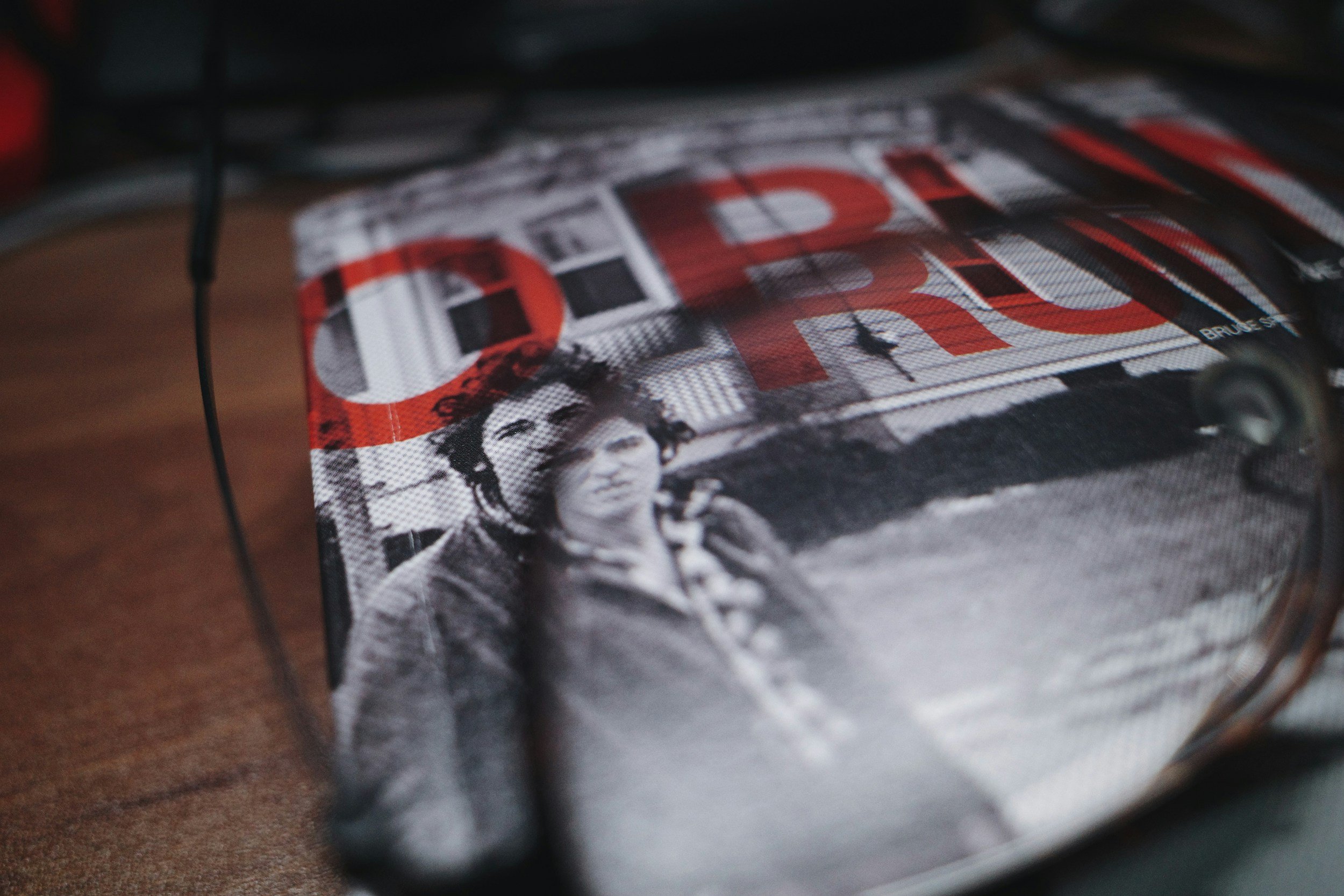
Bruce Springsteen wrote “The Streets of Minneapolis” on Saturday, Jan. 24, the day the videos of Alex Pretti being thrown to the ground and shot in the back by federal ethnic-cleansing goons zoomed around the globe.
By Steven Wishnia
Bruce Springsteen’s “The Streets of Minneapolis” is the best protest song of the 21st century.
It’s an instant song, born in a burst of outrage, much like Florence Reese scribbled the words to “Which Side Are You On?” on the back of a calendar 95 years ago, after Harlan County Sheriff J.H. Blair’s goons broke into her house looking for her husband during a coal miners’ strike in the Kentucky Appalachians.
Springsteen wrote it on Saturday, Jan. 24, the day the videos of Alex Pretti being thrown to the ground and shot in the back by federal ethnic-cleansing goons zoomed around the globe. Unlike Florence Reece, he had access to modern recording, digital communications, and the reach of an established star: He sent the finished song around the globe five days later.
It’s simple, like a folk song, just three chords, D, G, and A, the one-four, one-five chordal framework of country and gospel, going to the G on the chorus. Springsteen has used these changes before, on “Highway Patrolman,” from his classic 1984 acoustic album Nebraska. But “Highway Patrolman” is stark and somber, the tale of a rural state trooper’s moral ambivalence about his criminal older brother. “The Streets of Minneapolis” is anthemic, with big, surging chords and a chorus of “Oh Minneapolis, we hear your voice, singing through the bloody mist.”
Its most obvious ancestor is ’60s Bob Dylan, especially the free-blowing harmonica break. But Dylan’s vaunted protest songs were rarely this direct (with “Masters of War” an obvious exception). It’s probably more accurate to say Springsteen was channeling Woody Guthrie through a Dylanesque sound.
I also hear echoes of Merle Haggard. The country singer, born in an Okie migrant workers’ camp in California in 1937, was considered a right-winger in the late ‘60s, for songs like “Okie from Muskogee” and “The Fightin’ Side of Me” (which he later regretted). But few protest songs of the era dealt with social class as clearly as Haggard’s “Mama’s Hungry Eyes” — "us kids were just too young to realize/ That another class of people put us somewhere just below.” It also contains one of the most subtly tragic lyrics I’ve ever heard — “Just a little loss of courage as their age began to show/ And more sadness in my mama’s hungry eyes.”
“The Streets of Minneapolis” isn’t perfect. A few lines don’t flow well. But it works in allusions to the national anthem, “in the dawn’s early light,” and the Bible, “the stranger in our midst.” And its rallying cry is, “It’s our blood and bones, and these whistles and phones, against Miller and Noem’s dirty lies.”
“It’s hard to write a good protest song; there are plenty of pitfalls. You have to give enough detail to evoke the truth, to name names and avoid vagueness — but you don’t want it to sound like you’re singing a newspaper. ”
Who knows how many people under 40 are likely to listen to a Dylanesque song, though. They are more likely to be moved by the Caribbean drum-machine beats of Bad Bunny, whose Super Bowl halftime show generally wasn’t explicitly political, although his song “El Apagón” alluded to Puerto Rico’s power blackouts — but it enraged the foreigner-hating bigots of the Trump cult far more than if he had cursed their mothers and their putative occupations.
He did that with a celebration, a pageant of sugarcane fields, Nuyorican bodegas, and four generations dancing at a wedding; mixing in mandolinesque cuatros and romántico violins; and culminating in a parade carrying the flags of almost every American nation from Chile to Canada. Somos todos americanos, no solamente los estadounidenses.
On the other hand, when I played an open mic in a Brussels bar last summer, there were a couple twentyish Belgian men trying to learn Dylan’s early-’60s songs “Blowin’ in the Wind” and “The Times They Are A-Changin’” by copying the chords and reading the lyrics off their phone screens.
It’s hard to write a good protest song; there are plenty of pitfalls. You have to give enough detail to evoke the truth, to name names and avoid vagueness — but you don’t want it to sound like you’re singing a newspaper. It has to come from the soul. You have to express your outrage, but without hectoring people with an ideological hammer or a sanctimonious “I’m morally superior to you” attitude. You want to inspire people, but without clichés. And what’s topical today might be irrelevant in the future. The songs my 1980s punk band did against the war in El Salvador and apartheid in South Africa are ancient history now.
It also helps to have a catchy chorus. At the union rallies I’ve covered over the years, the most common music has been pop oldies whose chorus has a pointed message, even if it wasn’t originally political, like Aretha Franklin’s “Respect,” Donna Summer’s “She Works Hard for the Money,” and Twisted Sister’s “We’re Not Gonna Take It.” (In 2019, New Jersey public-sector workers pranked a leading state legislator who was about to defend his plans to cut their pensions and health care by blasting “We’re Not Gonna Take It” from a hidden speaker.)
"Which Side Are You On?" accomplishes all of that. Few people now know the story behind the line "or a thug for J.H. Blair," but the question "which side are you on?" is timeless. And like a good folk song, you can adapt the lyrics for different times and places.
I think Springsteen knows all this, and that he composed “Streets of Minneapolis” with an eye on the future, with lines like "in the winter of '26" and the chorus, "We'll remember the names of those who died, on the streets of Minneapolis."
Ultimately, it's the song that needed to be written for this moment.