
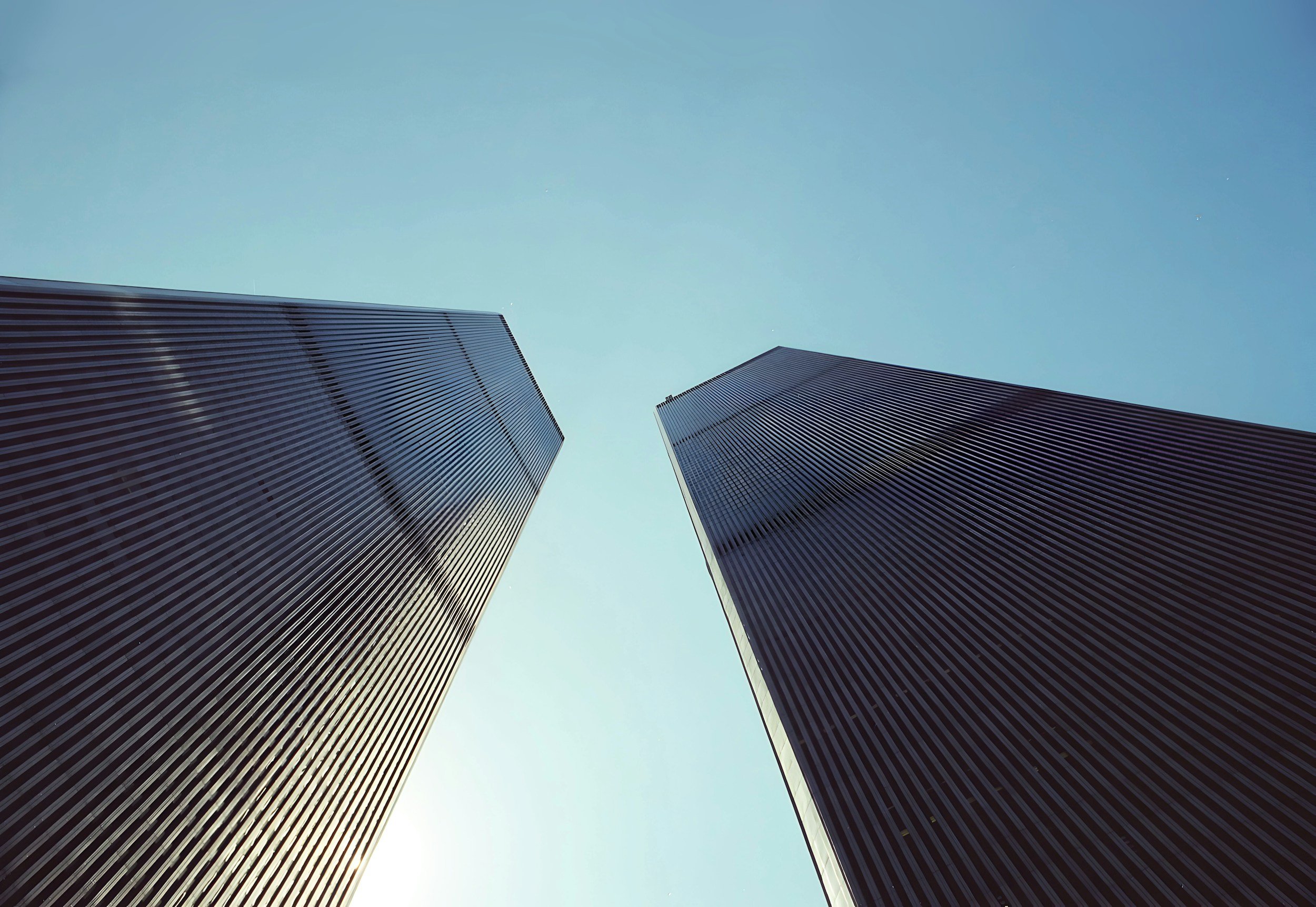
Twenty-five years may have passed since the Twin Towers were destroyed on Sept. 11, 2001—but the human toll continues to mount.
By Steve Wishnia
Twenty-five years have passesed since the 9/11 attacks on the World Trade Center, but the maladies caused by the resulting poisonous dust continue to linger, and the survivors are aging.
Over those 25 years, about 600 firefighters have died of diseases related to toxic exposure, more than the 343 killed when the buildings collapsed, Daily News editorial board member Michael Aronson told a Sept. 3 conference on the attacks’ lasting health effects, hosted by 9/11 Health Watch, Mount Sinai Health System, and the World Trade Center Health Program’s clinics.
The median age of the about 143,000 people in the health program is now over 60, said Dr. Michael A. Crane, medical director of its Mount Sinai clinic.
“We assume that the illnesses will become something worse,” said Sean Michael,the program’s Responder Steering Committee cochair, who was 31 when his fire company arrived at Ground Zero. “It isn’t an if, it is a when.”
Dr. Benjamin J. Luft, medical director of the program’s clinic at Stony Brook University, added that cognitive impairment is appearing at much younger ages.
Ten years ago, Dr. Luft said, 14.5% of patients had measurable, though minimal, impairment—an “enormously high” rate for a group whose average age was 49. This year, 55% had measurable impairment, and 3% to 6% had mild to moderate dementia. The ones with dementia, who included both firefighters and other survivors of the attacks, showed “striking abnormalities” in their brains such as amyloid plaques—though different from the plaques in people with Alzheimer’s disease.
He called it “dementia caused by environmental exposure.”
About 70% of patients in the program have some kind of sleep disturbance, said Dr. Iris G. Udasin, medical director of its clinic at Rutgers University in New Jersey, and 20,000 suffer from obstructive sleep apnea—in which their air passages close, cutting off their oxygen. Unlike typical apnea sufferers, she said, it does not correlate with being overweight. Instead, it’s made worse by post-traumatic stress syndrome and aerodigestive disorders such as stomach reflux and chronic lining sinusitis, and contributes to strokes and cognitive problems.
The Zadroga Act, passed by Congress on the last day of the 2010 session, was the turning point. It funded medical care for certain conditions suffered by responders, volunteers, and other survivors in the disaster area. In 2015, funding was extended until 2090.
That care has made a difference, said Fire Department Chief Medical Officer Dr. David J. Prezant. Almost all of the firefighters who came into the program had a “debilitating cough” and chronic shortness of breath; now only 9% and 22% do, respectively. The number with PTSD fell from 30% to 6%, and those suffering depression from 36% to 14%.
The moral: “We have to treat lung function right away.”
Having that access to care, added Uniformed Fire Officers Association President Jim Brosi, gave his late father eight more years of “quality of life.”
Getting the law passed wasn’t easy. There was resistance from Congressmembers whose attitude was that it was “New York’s just trying to get money,” said former Daily News reporter Michael McAuliff. He recalled a Republican House member from the South who had a seven-foot photo of the smoking ruins at Ground Zero on his office wall—and didn’t meet with people lobbying for the bill.
The need for it might not have been apparent at first, said former Rep. Peter King, a Long Island Republican, because people’s long-term diseases hadn’t developed yet—but after 2006, there was “no excuse.”
Health practitioners and union leaders are still bitter that the rush to return to business as usual exposed thousands of firefighters, workers, and Lower Manhattan residents to the poisonous dust.
Environmental Protection Agency head Christine Todd Whitman declared the air safe to breathe six days after the attack, noted 9/11 Environmental Action director Kimberly Flynn, and the city Department of Health said it was safe for children and pregnant women to return.
“It was a massive public-health disaster that was never treated as a public-health disaster,” said Micki Siegel de Hernández, former Communications Workers of America deputy director of occupational safety and health. “The streets were white. It looked like snow. That was toxic dust.”
“I’d never seen green smoke before,” said Brosi.
Some mistakes are inevitable in the throes of dealing with a disaster, said 9/11 Health Watch head Benjamin Chevat. But both the city and the federal government, he said, knew by October that there was a problem and didn’t want to admit their mistakes.
The city administration long denied that the dust caused health problems, and in 2007, Mayor Michael Bloomberg claimed that the lung scarring that killed Detective James Zadroga, who the Zadroga Act is named for, had come from injecting prescription drugs, not from inhaling Ground Zero dust. He quickly apologized, and became a strong supporter of the bill.
The Zadroga Act has some gaps. Though it is funded through 2090, people worry that might be crimped as the cost of care rises and survivors become more seriously ill. Access to care is limited: The mental-health program at the Williams Street clinic has 145 patients and 71 people on the waiting list, according to medical director Dr. Alyssa Ragbu.
It did not establish a program to keep track of the health of children who had lived or attended school within 1.5 miles of Ground Zero until 2023, including the 19,000 at public schools that reopened a week to six months after the attacks. And the estimated 400,000 “survivors,” people who lived, worked, or attended school in that area—among them thousands of public-sector workers ordered back to their offices—were a lower priority for receiving health care. They had to show symptoms first.
As late as 2019, there were only about 22,000 survivors enrolled in the health program. That number has since risen to 55,000, according to federal Centers for Disease Control figures.
Survivors now make up slightly more than half of the 51,000 people in the program certified with cancer, but first responders account for almost three-fourths of the 60,000 with aerodigestive disorders.
The law also doesn’t cover care for heart ailments, dementia, and autoimmune diseases. In June, the Department of Health and Human Services denied a petition to have it cover ischemic heart disease, claiming “insufficient evidence.” The directors of the World Trade Center health program clinics petitioned for reconsideration, calling the denial “scientifically flawed.”
Petitions to have autoimmune disease and dementia covered have been pending since September 2023 and February 2025 respectively.
“We can aggrandize ourselves like we’re on Mount Rushmore, or we can roll up our sleeves and get to fuckin’ work,” urged John Feal, a demolition supervisor who became an activist after he lost part of his foot when it was crushed by a steel beam he was removing from the ruins of the towers—and was denied workers’ compensation.
Another theme was how to get people to pay attention to the still-open wounds of 9/11, especially those who weren’t born yet or come from outside the New York region.
“We’re going to be fighting for that for the rest of our natural lives,” said former New York State AFL-CIO president Denis Hughes, who as an apprentice electrician helped build the World Trade Center’s north tower. “We have to tell everybody: ‘It is not allowed to forget what this city went through.’”
Micki Siegel de Hernández is pessimistic, given the current political situation. “We can’t even get a law passed to protect people who are dying from heat exposure,” she said.
Americans are now witnessing the “further dismantling of disaster response in this country,” Kimberly Flynn warned. “We are going to have to build some serious disaster solidarity.”