
NYC Building Service Workers Push Back Against RAB Attack—Authorize Strike
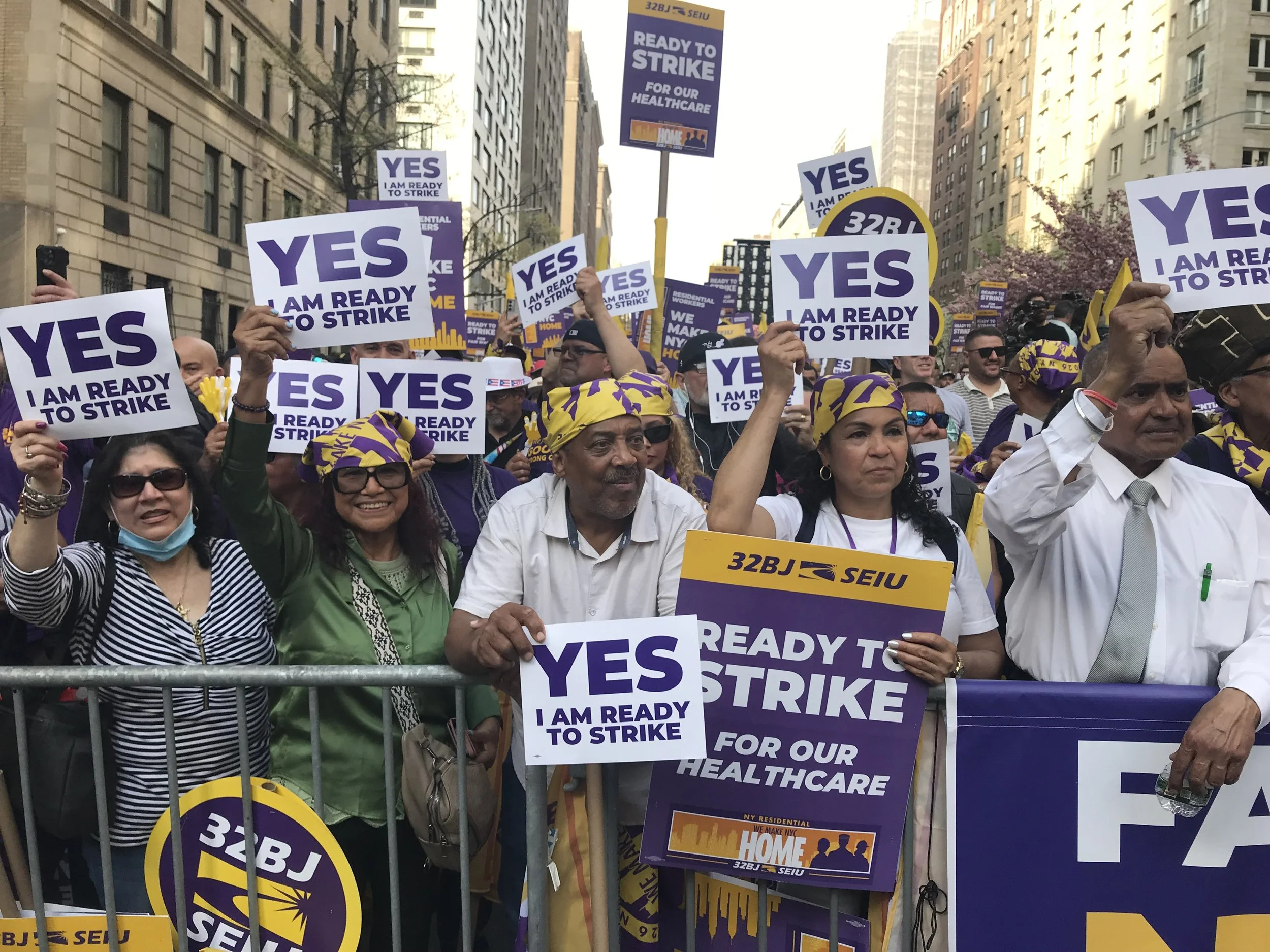
Yes, I am Ready to Strike: 32BJ building services workers took to the streets of New York City on April 15 to authorize a strike that could involve tens of thousands of people walking off the job. Photos/Steve Wishnia
By Steve Wishnia
Arlind Lela led a chant of “Kursluftujmë fitojmë” at 32BJ SEIU’s rally April 15. That means “We fight and win” in Albanian, a language spoken by many of the building-service workers union’s members.
Five days before the contract covering 34,000 residential-building workers will expire, a crowd the union estimated at 10,000 people assembled in the downtown lanes of Park Avenue on the Upper East Side and authorized a strike by voice vote.
“We’ve sat at the table four times, and we do not have one single agreement on anything of contention,” 32BJ President Manny Pastreich told the crowd of doormen, concierges, porters, and superintendents, and supporters. The Realty Advisory Board on Labor Relations (RAB), the group representing building owners, is demanding a two-tier contract in which workers hired in the future would get lower pay and benefits, and for workers to begin paying a share of their health-insurance premiums.
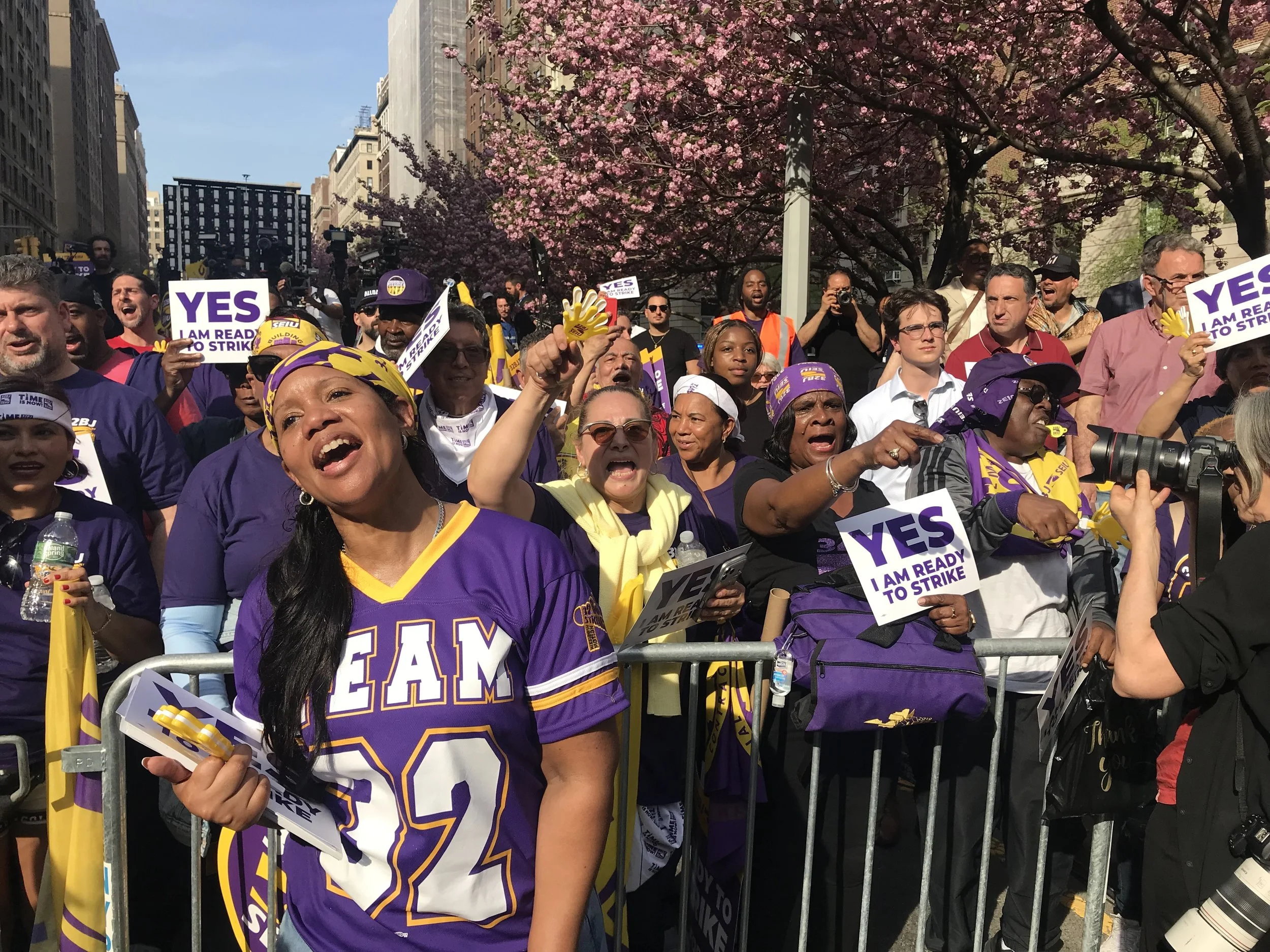
32BJ building service workers cheer vote to authorize a strike.
“That’s an attack on our standards, but even more than that, it’s an attempt to divide us and puts a target on all of you who’ve been there for years,” Pastreich said. “We cannot let this happen. They say ‘fair wages’ in one breath, and in the next breath, they say ‘premium-sharing.’ Is that fair?”
RAB President Howard Rothschild said in a statement that the givebacks were necessary because “the New York City residential real-estate industry is facing mounting pressures, including the likelihood of 0% rent increases on stabilized units for years to come, overregulation, and rising operating costs.
“Without meaningful movement to address costs, including health-care contributions and the establishment of a Tier II structure, the long-term sustainability of the industry and its workforce is at risk,” he added. “Now is the time for both sides to come together and negotiate a contract that reflects these realities and supports a viable path forward.”
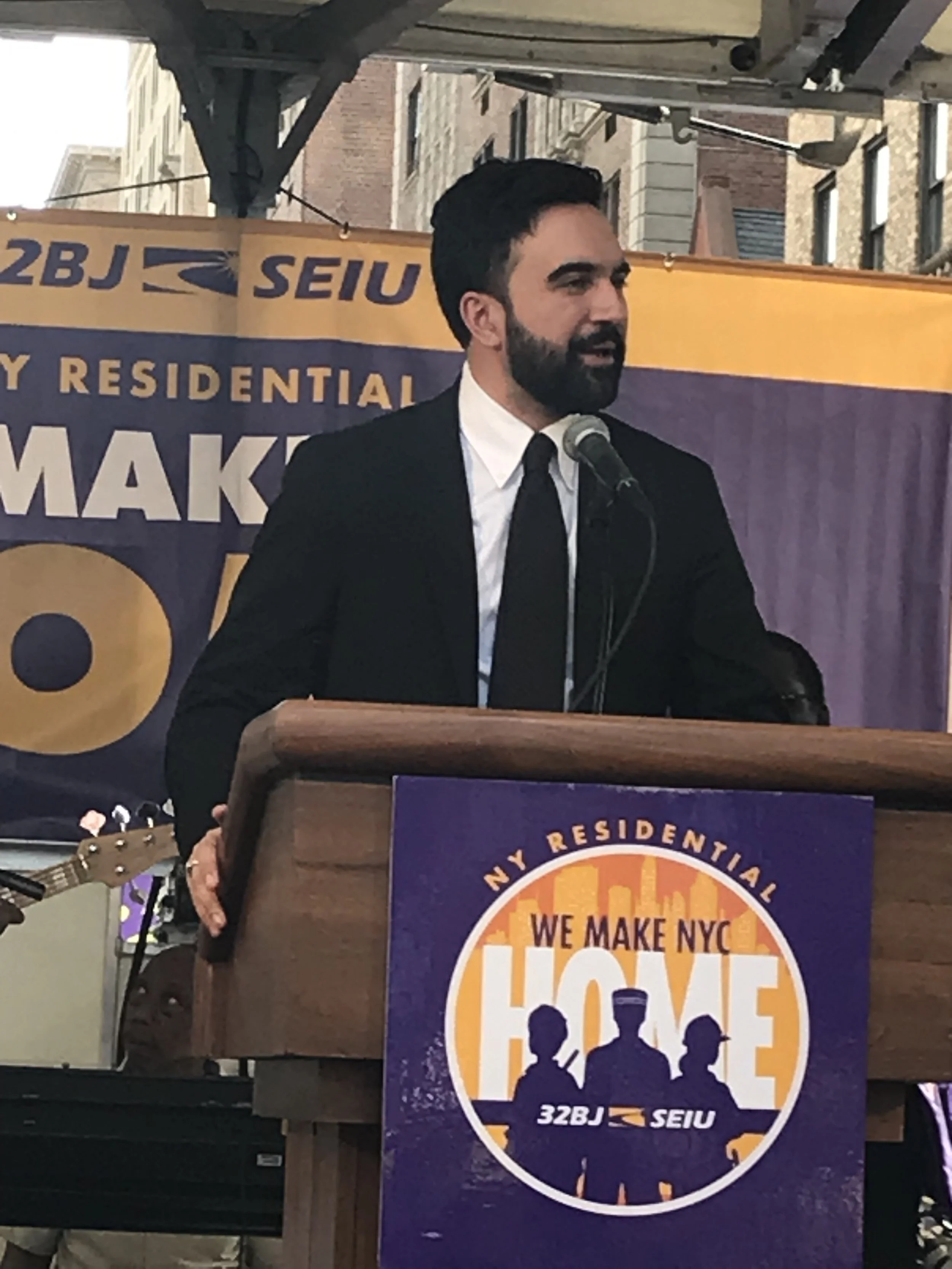
New York City Mayor Zohran Mamdani speaks out in support of 32BJ building service workers.
“They want to undermine everything we have built, pay people less, and divide us,” Charles Vega, a bargaining-committee member and doorman at a Park Avenue building a few blocks south, told the rally.
“Our health insurance is not up for negotiation,” Maria Silva, one of 32BJ’s 1,400 strike captains, told the rally. It paid her medical bills when she had cancer, she said.
The RAB has unsuccessfully demanded similar givebacks in other recent contract talks with 32BJ, but “you can never take anything for granted,” Pastreich told Work-Bites after the rally. Residential-building workers in 3,500 buildings in the four boroughs covered by the expiring contract—Manhattan, Brooklyn, Queens, and Staten Island—make $60,000 a year and have solid health benefits, he said. Those just across the river in Jersey City make $34,000 and have weak health benefits.
“We have to take defending our standards very seriously,” he said.
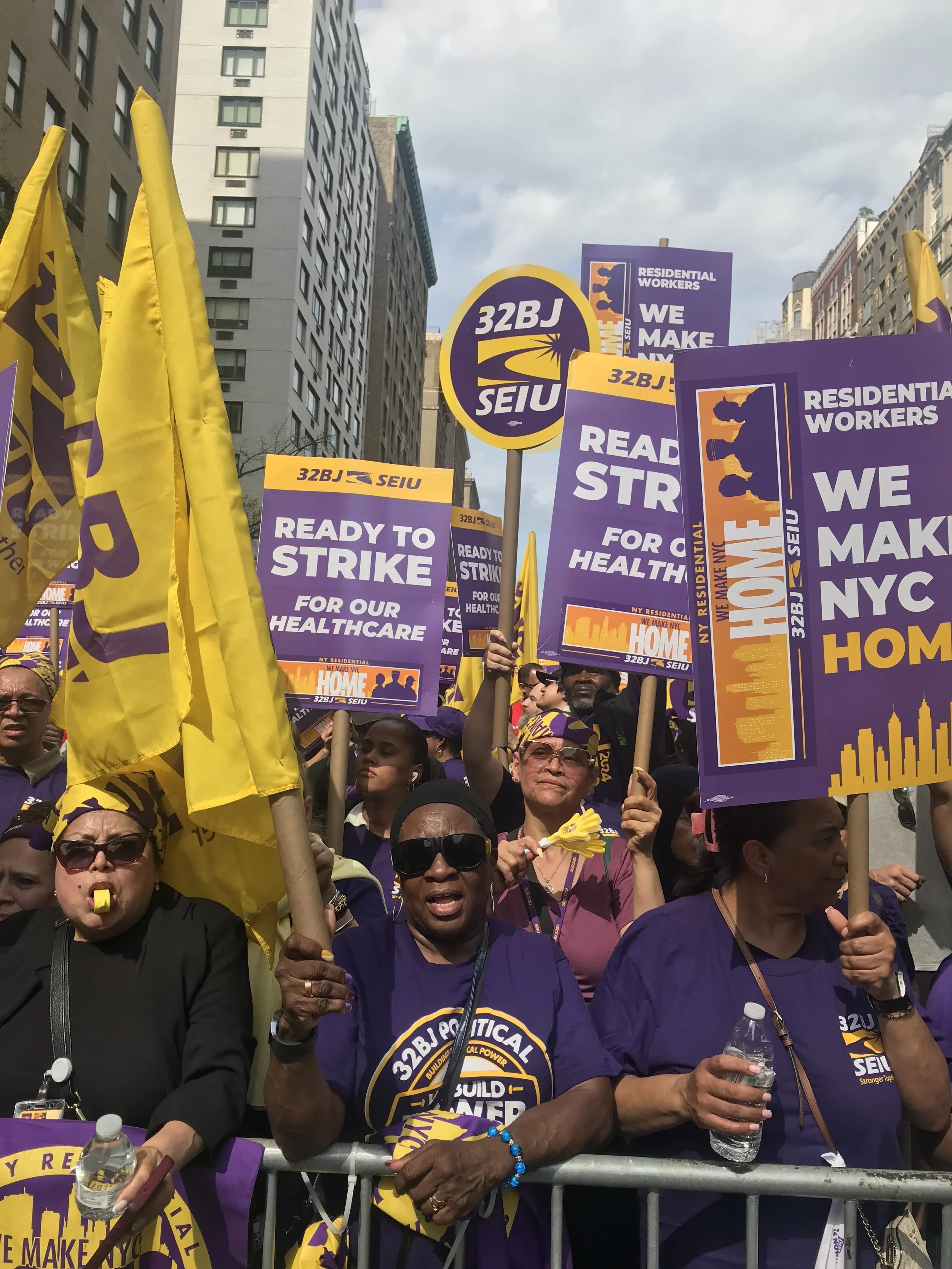
Building service workers see the Real Estate Advisory Board’s contract demands as nothing but blatant attempts at union-busting.
32BJ says it is seeking fair wage increases, pension improvements, and protection of all benefits. Market-rate rental apartments make up “a substantial portion” of the rental units where its members work, and they “are benefiting from record high rents,” it argues. About 35% of the residential-service workers are in rental buildings, with 43% in co-ops and 22% in condos.
The union was backed by a host of elected officials, including Mayor Zohran Mamdani, Public Advocate Jumaane Williams, city Comptroller Mark Levine, City Council Speaker Julie Menin, and borough presidents Antonio Reynoso of Brooklyn and Brad Hoylman of Manhattan.
“Who keeps these buildings running? You do!” Mamdani said. The workers, he added, “maintain million-dollar apartments” but often “struggle to make rent on the first of the month.”
Union leaders speaking included Mario Cilento of the New York State AFL-CIO, Brendan Griffith of the New York City Central Labor Council, Gary LaBarbera of the Building and Construction Trades Council, Pat Kane of the New York State Nurses Association, and national SEIU President April Verrett.
“What happens here sends a message across New York City about what working people can expect—and what employers think they can get away with,” Griffith said.
“It’s more than a contract expiration. Respect is expiring,” Verrett told the crowd. “Working people ‘doing more with less’ expired a long-ass time ago.”
Aside from fighting the givebacks, Pastreich told Work-Bites, “inflation has made this a very different situation” for demanding pay raises and pension increases. The results, he says, will determine if workers can “continue to afford to live in the city.”
“This is 34,000 people on one contract,” he said. That’s the largest bargaining unit among 32BJ’s 185,000 members.
Bargaining resumed April 16.