
“My dilemma was that the union’s bark was worse than its bite in this situation.”—Phil Cohen

War Stories By Phil Cohen
One of the labor movement’s most essential obligations is enforcing health and safety regulations. Factories, warehouses and other industrial facilities are inherently dangerous environments, compounded by management deliberately ignoring serious hazards to avoid repair costs. Ironically this is one of the least important issues for many workers who trust in their luck, focusing instead on wages, benefits and plant rules.
Over the years I’ve been astonished by how many union reps are utterly negligent and incompetent when it comes to identifying workplace perils and forcing management to make necessary improvements. Most safety violations are never reported to OSHA. When agents do visit a plant, investigations tend to be superficial, resulting in minor consequences for employers that are far less expensive than overhauling equipment—unless knowledgeable union reps are holding the agency accountable. The number of employees permanently injured by workplace hazards every month would horrify most Americans.
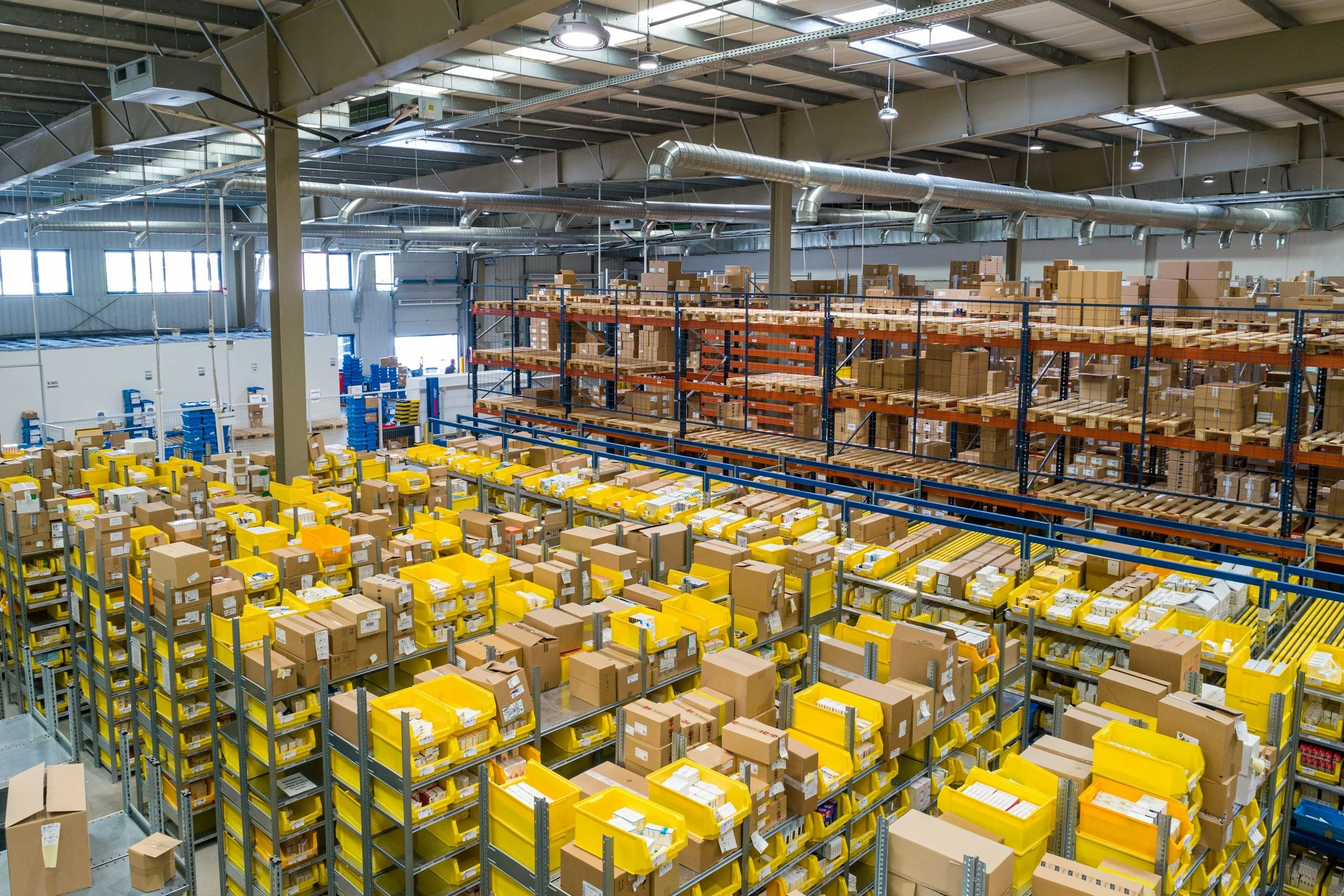
The Kmart Distribution Center (DC) in Greensboro, North Carolina was an enormous warehouse with over 700 employees. At the receiving docks, workers unloaded incoming trucks from vendors. Merchandise was then assigned a bar code, transported by forklift to the appropriate storage module, and later delivered via an intricate network of conveyor belts to the shipping bays when requested by retail outlets.
Modules were three stories high, longer than a city block and appeared as if constructed with an enormous erector set. Each level had top and bottom shelves where pallets of freight were inventoried. The Casepack module was designated for stores ordering entire cases of specific products…everything from toothpaste to gallons of bleach. The employee positioned closest to a requested item was notified, located the crate with a barcode scanner, and hoisted it onto the conveyor belt.
Unlike many union reps, I’m a strong believer in regular plant tours, making myself available to the entire workforce and demonstrating an ongoing union presence on the shop floor. While visiting the Kmart DC during the early winter of 2003, I began observing groups of workers standing about in front of the Casepack module with arms in a sling, doing little or no work on all three shifts. Most of them appeared to be in their twenties or thirties. The plant access language in the contract only allowed brief conversations with employees, so all I could discern was that they’d been injured at work.
I filed an information request with Plant Manager Joe Wells, asking for the OSHA 200 (accident and injury) logs for Casepack during the past three years. I considered myself shock-proof by that point in life but upon receiving the documents was stunned to learn that half of all Casepack employees had suffered serious ergonomic injuries to arms, shoulders, or backs.
The collective bargaining agreement allowed the union rep to conduct an in-depth investigation of work areas cited in a grievance, accompanied by the plant manager. I filed a grievance pursuant to the Health and Safety article along with a written request for such a visit. During the grievance hearing two weeks later, Joe Wells nonchalantly responded that any safety violations would have already been identified and remedied by management, and that heavy physical work came with the risk of injuries. “I see nothing to be gained from the union conducting its own investigation,” he said. “May I remind you that most of the associates in question are still assigned to light duty and getting paid.”
Worker’s comp is a legally mandated insurance policy that adjusts its rates relative to the payment of claims. Light duty is an onerous tactic used by employers in every industry to reduce premium increases. Over time, it’s often less expensive to pay employees to show up and remain idle than to have worker’s comp cover extended absences. Workers are given the impression that management is looking out for their interests and sometimes forgo urgently needed surgery.
I insisted on my contractual right to see for myself. “Something is very wrong here. I’m giving you an opportunity to work with the union to address the problem before I’m obliged to file an OSHA complaint,” I told him, knowing full-well that the details of my observations would be essential to getting a meaningful response from the agency. An in-house resolution could also be achieved in less time. Joe said he’d have to look for an available date on his calendar and get back with me.
I followed-up with the plant manager two weeks later to schedule the inspection. “I’ve run it up the flag pole to corporate and haven’t heard back from them yet,” he told me.
“In the meantime, who’s doing all the work in Casepack with half the department on light duty?” I asked.
“Everyone else is having to pull a lot of overtime right now to pick up the slack.”
“That sounds like an unprofitable policy; paying overtime rates to half the department while the rest are getting paid to do nothing. I’d suggest telling your regional director that this needs to be expedited.”
“I’ll see what I can do,” replied Joe with indifference.
The situation remained on hold for another month. Walking down the Casepack aisles one afternoon, the view reminded me of a warzone in Beirut, lined with wounded young men. I found Joe Wells sitting behind the desk in his office. “I thought we were trying to develop a good working relationship,” I stated. “You’re putting me in a position where I’ll be obliged to file charges with not only OSHA, but also the NLRB for unilaterally changing the contact by denying the union’s right to investigate a grievance.”
“I’ll run it up the flagpole again,” said Joe with a hint of humor in his voice.”
My dilemma was that the union’s bark was worse than its bite in this situation. With a contract in force, the National Labor Relations Board defers isolated allegations to arbitration. The process could be extended for two years with the best possible outcome being an order to conduct the investigation desperately needed now.
OSHA doesn’t have specific ergonomic standards. The complaint would have to be filed under the General Duty Clause, legislated to cover all safety hazards not defined and quantified by the statutes. It’s a difficult hill to climb. I could only hope the corporate executives to whom Joe reported lacked a full understanding of how both agencies worked.
The Inspection
The standoff dragged on for six months, during which time the OSHA 200 logs continued to document new Casepack injuries. I also heard reports from shop stewards of previously injured workers being returned to full duty while still in pain and with limited range of motion, based on a written release from the company doctor. Physicians who assume this role are usually bottom feeders of the health care system, not sufficiently competent to succeed in private practice.
Knowing which side of their bread is buttered, these charlatans prioritize the company’s business interests over the health of patients.
The art of negotiating with management from a position of minimal leverage involves resisting the temptation to lecture about their lack of humanity in dealing with workers. This only serves to make them defensive on a personal level while casting the union rep as an amateur in their eyes, thus undermining the objective of reaching a settlement. The more successful strategy is identifying their self interest and framing the issue from that perspective.
“Our joint inspection of Casepack is way overdue,” I told Joe Wells during a grievance meeting in June. “Before I file charges with OSHA and the NLRB, further complicating this process, you should consider what a lousy business decision the company is making. If we all spend an hour in the module and don’t find anything new, nothing’s been lost. On the other hand, if we get to the root cause of the problem, think how much money you’ll save in worker’s comp premiums and overtime pay.”
“That’s a legitimate point,” said Joe. “Let me speak with corporate and I’ll get back to you.”
Two weeks later, Joe Wells and I, accompanied by the local union president, climbed the narrow metal stairs leading to the first level of the Casepack module. I suggested that we gather the immediately visible half-dozen workers for an interview. “There’s no point having the same discussion thirty times before we’re finished,” I said and Joe agreed.
I took the lead as soon as the small group surrounded us and told them the union and company were jointly investigating the injury rate in their department. “Why do you think more people are getting seriously hurt in Casepack each month than the whole rest of the DC put together?” I inquired.
“All I can do is speak for myself,” replied a short young man in a sleeveless t-shirt displaying muscular arms. “When I have to stand on my toes and reach up over my head to grab a heavy carton from the second level, then turn and lower it onto the belt, I sometimes get a shooting pain in my back or shoulder. It usually doesn’t last so I think I’m pretty much OK for now.”
“Give me an example of a heavy carton,” I requested.
“Canned vegetables, bottled water…stuff like that.”
“What happens when those boxes are on the lower level?”
“They’re still heavy, but all I have to do is swing around and place them on the belt, which is at about the same height as the shelf.”
The other workers vigorously nodded their heads and a few chimed in with verbal agreement.
“What kind of cartons on the top level don’t pose a problem?” I asked.
“Tooth brushes, cosmetics…personal care kind of stuff,” replied the first man who’d spoken.
Joe and I continued on to the far end of the module and then climbed stairs to the upper stories. The feedback remained consistent.
“Would it be possible for you to instruct forklift drivers to place all heavy freight on the bottom shelf and all lighter boxes on top?” I asked Joe once the tour was finished.
“Yes, I could do that,” he replied.
“How long would the policy shift take?”
“We can’t rearrange everything already in storage without shutting down the operation, but going forward, the change can begin tomorrow. I assume you’ll be withdrawing the grievance now.”
“Once I have confirmation that the new policy is consistently in effect, you’ll have my withdrawal in writing.”
For the remainder of 2003, the OSHA 200 logs reported only two Casepack injuries, one ergonomically related and the other involving someone who’d banged his knee on the metal steps.
This had been the only ergonomics crisis I’ve ever encountered that didn’t require a thorough examination of workplace architecture to identify areas needing renovation. Kmart wasn’t so much been in violation of OSHA regulations, but rather the laws of common sense.
Despite how the years have jaded me, I’m still amazed that it took the plant manager half a year to authorize an investigation that unraveled the problem in five minutes, to the advantage of both workers and the company. If Joe had been reluctant to bolster the union’s profile by involving me, he could have simply visited the department himself, asked the same questions and gotten identical responses. The simple truth is he didn’t care enough to invest his time. During the delay, numerous employees endured unnecessary injuries. Management curriculums often involve desensitizing students to the suffering and hardship of hourly workers.
A loophole in the right-to-work statutes makes it possible for unions to only refer members to its workers comp lawyers. We were represented in this arena by a brilliant attorney named Valerie Johnson, who ensured our injured Casepack members got the necessary medical care and negotiated substantial settlements for those who were permanently disabled. But no amount of money can adequately compensate a young person who’s been partially crippled for life.
There are few Americans considered more expendable than industrial employees. Management views them similar to how consumers regard appliances: If one breaks, get it fixed. If that’s not possible, find a new one.
Phil Cohen spent 30 years in the field as Special Projects Coordinator for Workers United/SEIU, and specialized in defeating professional union busters. He’s the author of Fighting Union Busters in a Carolina Carpet Mill and The Jackson Project: War in the American Workplace.