
NYU Professors Strike; Admin Looks to Hire Scabs
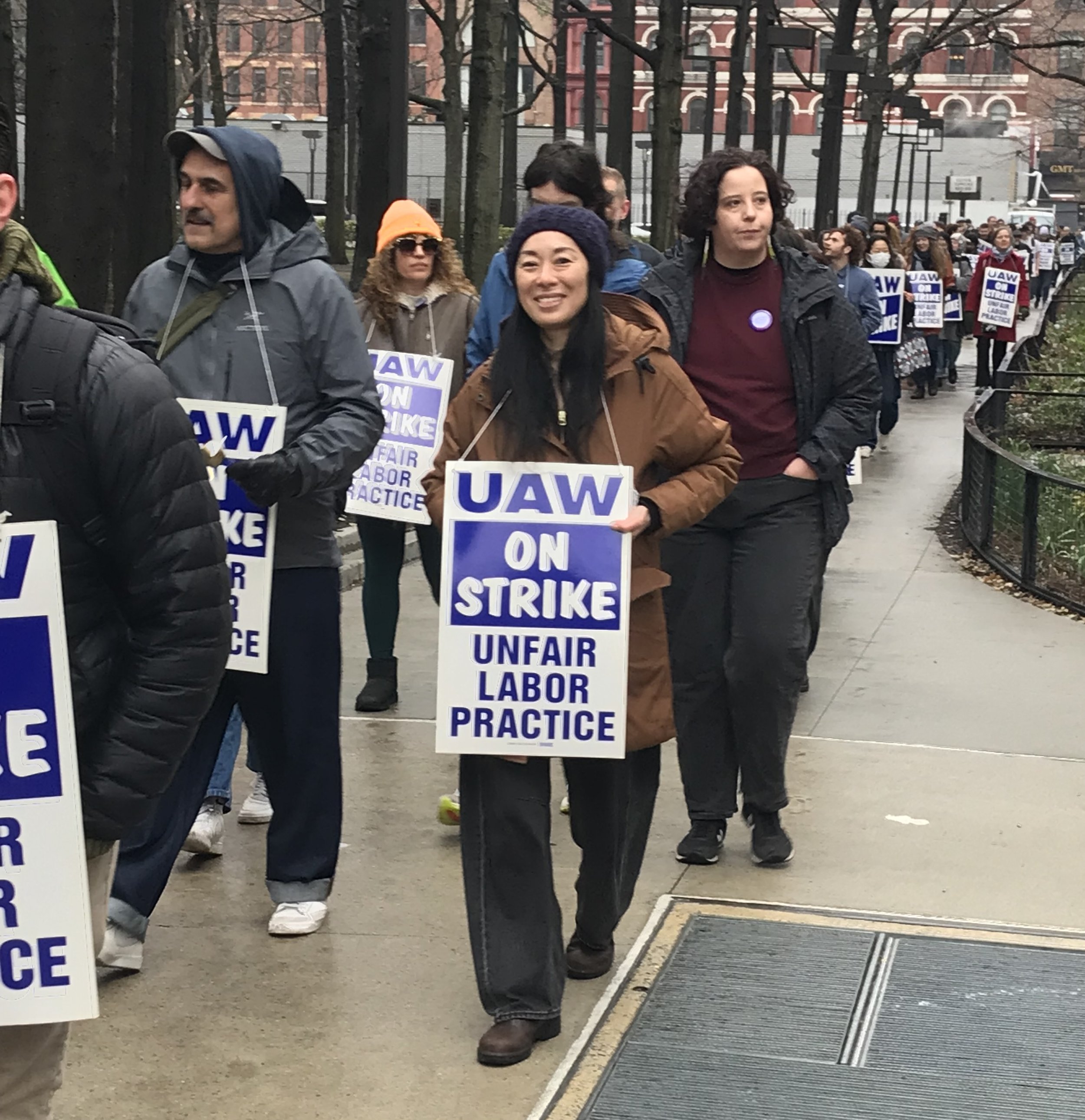
Contract Faculty Union members at NYU say they want to be recognized for their contributions to the university. Photos/Steve Wishnia
By Steve Wishnia
A few seconds before 11 on the morning of March 23, about two dozen union members and supporters in front of New York University’s Paulson Center counted down—“Five! Four! Three! Two! One!”—and broke into a chant, “If we don’t get it, shut it down!”
“We’re officially on strike,” a woman said.
NYU’s Contract Faculty Union (CFU-UAW) had announced earlier, after an all-night bargaining session, that it was extending its strike deadline from 8 a.m. until 11 a.m. But the university administration, it said, did not deliver its counterproposal until a few minutes before 11.
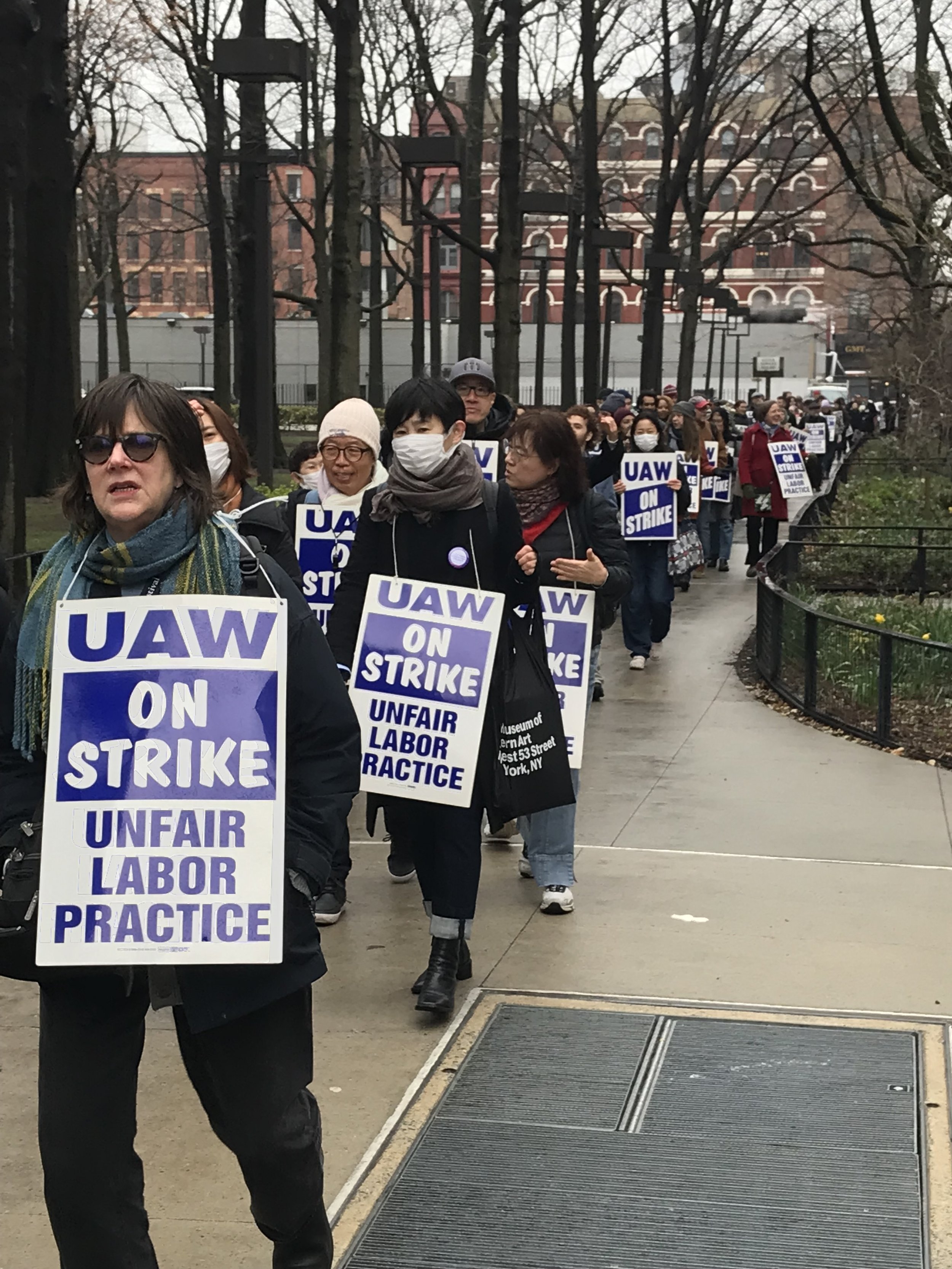
By 11:30, the crowd had grown to about 200 people. By 12:45, it was big enough for the picket line to loop back and forth on a whole block of Bleecker Street.
The CFU, a United Auto Workers affiliate, which represents the about 930 NYU faculty members who work on contracts, has been trying to negotiate a first contract for 16 months. They made some progress over the weekend, both sides agree. The university said they have reached tentative agreements on 30 issues, and union spokesperson Brandon Hogan said they were “very close” on a key job-security provision: “Presumptive renewal,” in which renewing professors’ contracts would be largely a formality once they’ve worked long enough.
That would be “a big win,” economics professor Johann Jaeckel told Work-Bites. Hogan, who teaches political philosophy, has been at NYU for 18 years, but had to put together a portfolio the last time his contract expired. Creative-writing professor Carley Moore, a CFU organizing-committee member, has taught at NYU for 31 years, but still has to reapply for her job periodically.
“It’s very tenuous,” she says. “We teach more than half of the classes at NYU. We want to be recognized for our contributions to the university.”
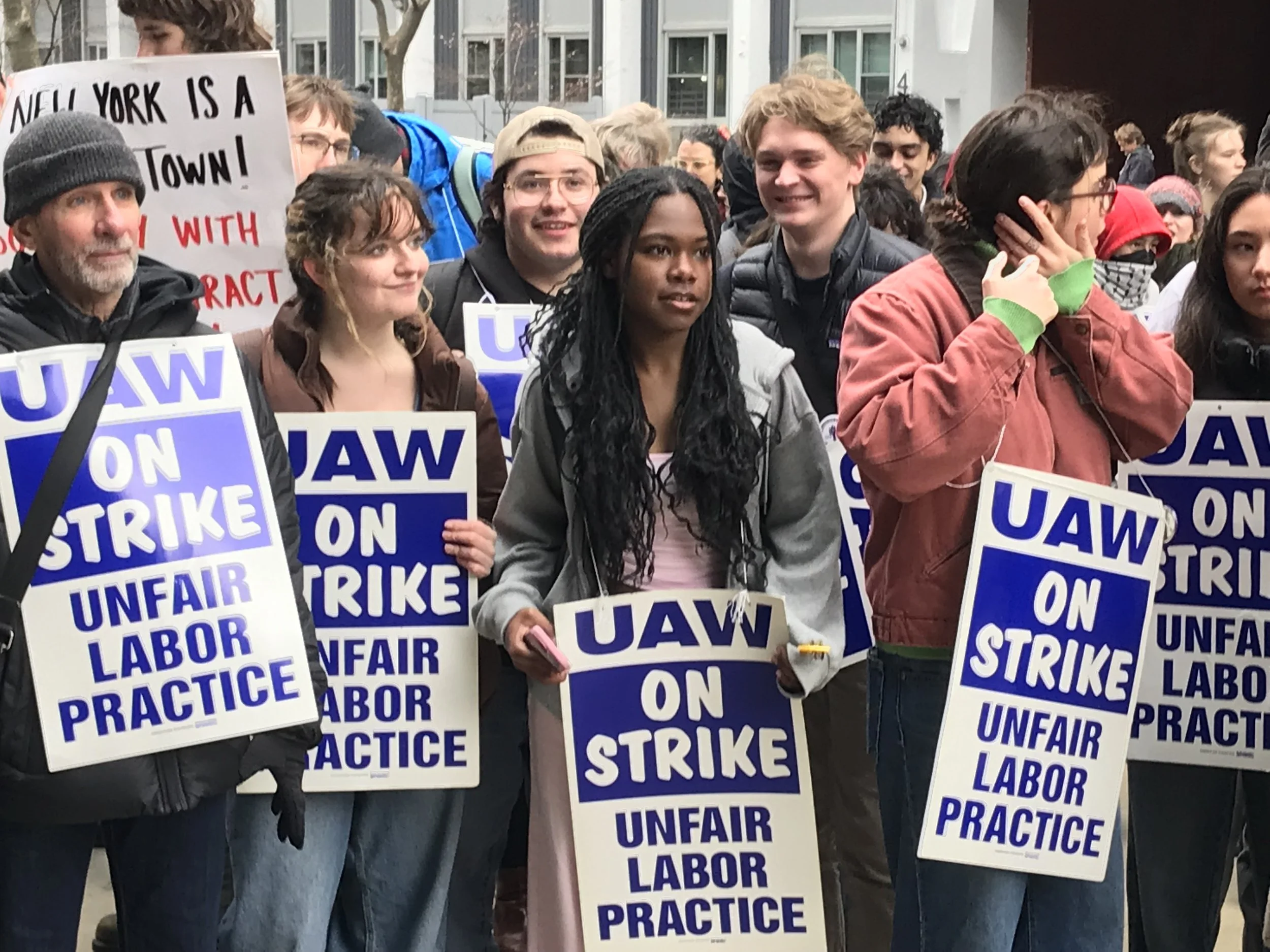
The administration’s claim that it’s offering what would be “the highest minimum salaries of any unionized contract faculty in the country” may be true—but it ignores that the New York area has among the highest housing costs in the nation.
The union made some concessions over the weekend, she added, but couldn’t reach a deal with the administration on getting a living wage, equal pay for equal work, correcting salary “compression” (where longtime contract faculty make less than more recent hires), and housing.
“We felt they hadn’t done their homework, and they haven’t completed their assignments,” she said.
NYU chief communications officer Wiley Norvell called the strike “fundamentally unnecessary.”
“We have a collective responsibility to our students, and the union owed it to them to pursue every option at the negotiating table before disrupting their education. They haven’t,” he said in a statement. “They chose to strike even after the University remained at the bargaining table through the weekend and overnight. We presented a generous and comprehensive package that would improve the lives of every one of its members, including significant raises, the highest minimum salaries of any unionized contract faculty in the country, and comprehensive benefits including enhanced family care.”
The university said it will continue classes by hiring “substitutes”—a euphemism for strikebreakers—and asking other faculty to take on extra work.
NYU “had the chutzpah to ask AAUP to scab,” Zachary Samalin, vice president of the school’s American Association of University Professors chapter, told a lunch-hour rally, saying they’d refused. The tenure-track professors in AAUP, however, do not have collective-bargaining rights. Under the Supreme Court’s 1980 decision in National Labor Relations Board v. Yeshiva University, explains Sharryn Kasmir, an AAUP vice-president at Hofstra University on Long Island, professors with permanent jobs at private universities are considered “managerial” employees and thus barred from unionizing, except for those who already had unions then.
“Does anyone believe that NYU doesn’t have the money or the will to settle this contract?”
Hogan told Work-Bites that the administration’s claim that it’s offering what would be “the highest minimum salaries of any unionized contract faculty in the country” is true—but it ignores that the New York area has among the highest housing costs in the nation.
The CFU has been seeking housing benefits for contract faculty. Tenured professors, he explained, can live in university-owned apartments, but others are on their own, in a city where even with a $90,000-a-year salary it’s still hard to find a two-bedroom apartment that rents for less than half of their take-home pay.
Workload is another issue. Sarah Rosenthal, who teaches technical writing to engineering students, has five courses a semester and works more than 40 hours a week, but says the administration claims that’s not excessive because she coteaches them with an engineering professor.
Union leaders from several other metropolitan-area campuses turned out in support, including St. John’s University in Queens, the New School, Hofstra, Rutgers in New Jersey, and Columbia—where because of the Yeshiva decision, AAUP only does advocacy, not bargaining—but contract faculty are seeking recognition for their union. The New School is in the process of axing about one-fifth of its faculty, and St. John’s last month declared it was cancelling its recognition of the two unions that have represented faculty since 1970.
“Universities—if you value your students, you must value your faculty,” St. John’s professor Sophie Bell told the crowd. The federal government’s attacks on universities, she added, gives administrators great cover to attack workers’ rights.
“Does anyone believe that NYU doesn’t have the money or the will to settle this contract?” Professional Staff Congress President James Davis asked. The 30,000 City University faculty and staff it represents include 11,000 contract faculty, he noted.
The Teamsters Union, according to the CFU, has said it will not make deliveries to any NYU building with an active picket line.