
‘They Won’t Be Able to Stop Us’: What One Man Learned After Occupying Zuccotti Park 15 Years Ago
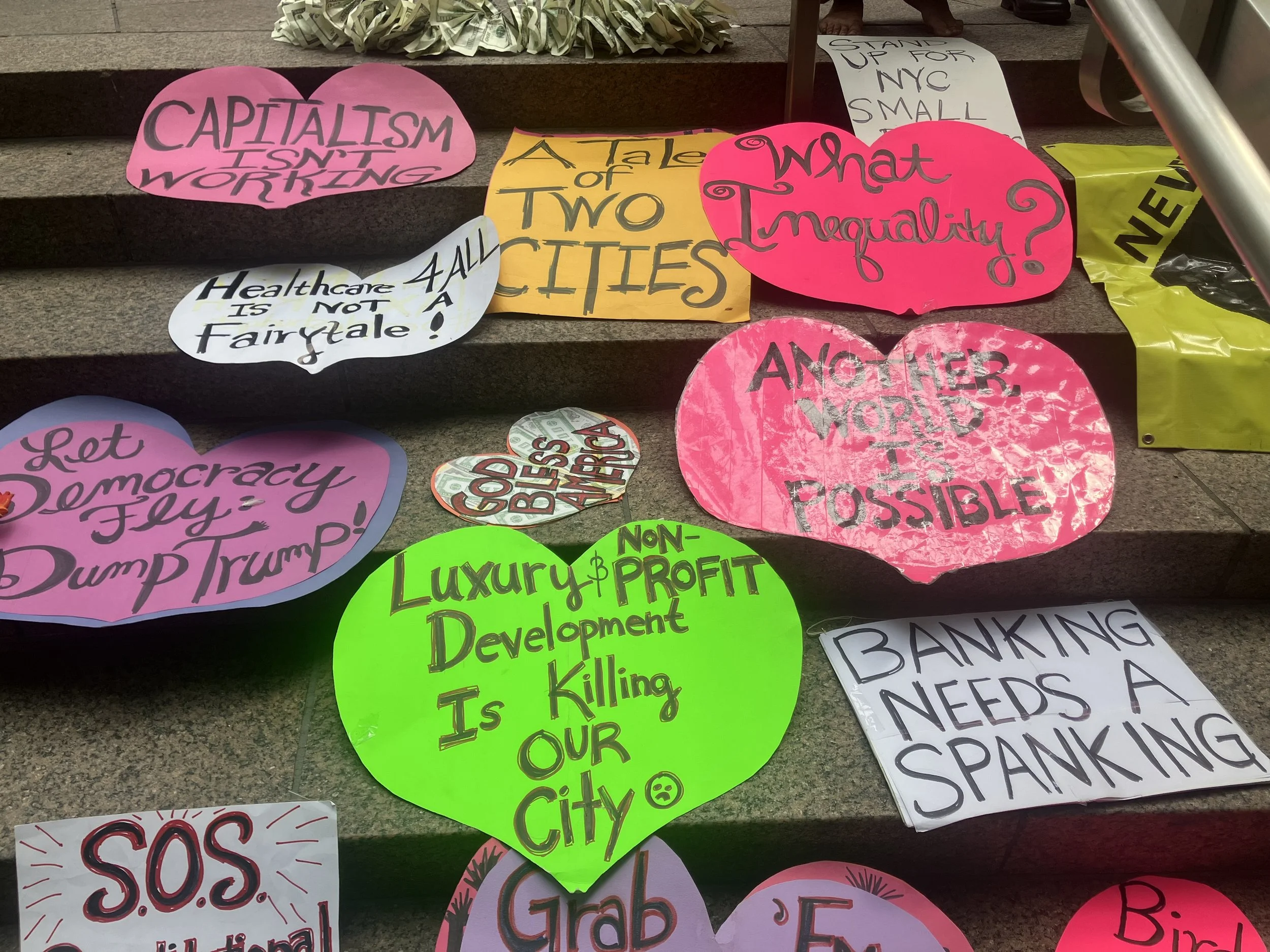
Signs and placards displayed on the steps of Zuccotti Park on Sept. 17.
By Joe Maniscalco
This week marked the 15th anniversary of Occupy Wall Street. But just a small band of activists, many of whom were at the Zuccotti Park encampment in Lower Manhattan that sparked the whole movement back in 2011, were on hand Sept. 17 to actually mark the occasion.
Jerry Ashton, “unintended activist” and proud son of a union trucker out of the state of Oregon, was one of them.
“People didn't listen to us 15 years ago—and this is the America we have today,” he told Work-Bites as the rest of the Financial District swirled by on Thursday. “People kicked us out of the park. People called us a failure.”
In 2011, the Doomsday Clock stood at six minutes to midnight. Today, the Bulletin of the Atomic Scientists tells us we are 85 seconds until global catastrophe stemming from nuclear war, climate change, the misuse of biotechnology, and the potential threat of artificial intelligence.
Even Occupy co-creator Micah Bornfree, PhD has called what happened at Zuccotti Park a decade-and-a-half ago a failure—albeit a constructive one.
“We set out to get money out of politics,” he said in an online statement marking Occupy’s 15th anniversary. “We did not. We believed that if enough people filled the streets, governments would have to respond. They did not. We tested the central hypothesis of contemporary protest—that mass spectacle yields political concession—and we proved it false.”
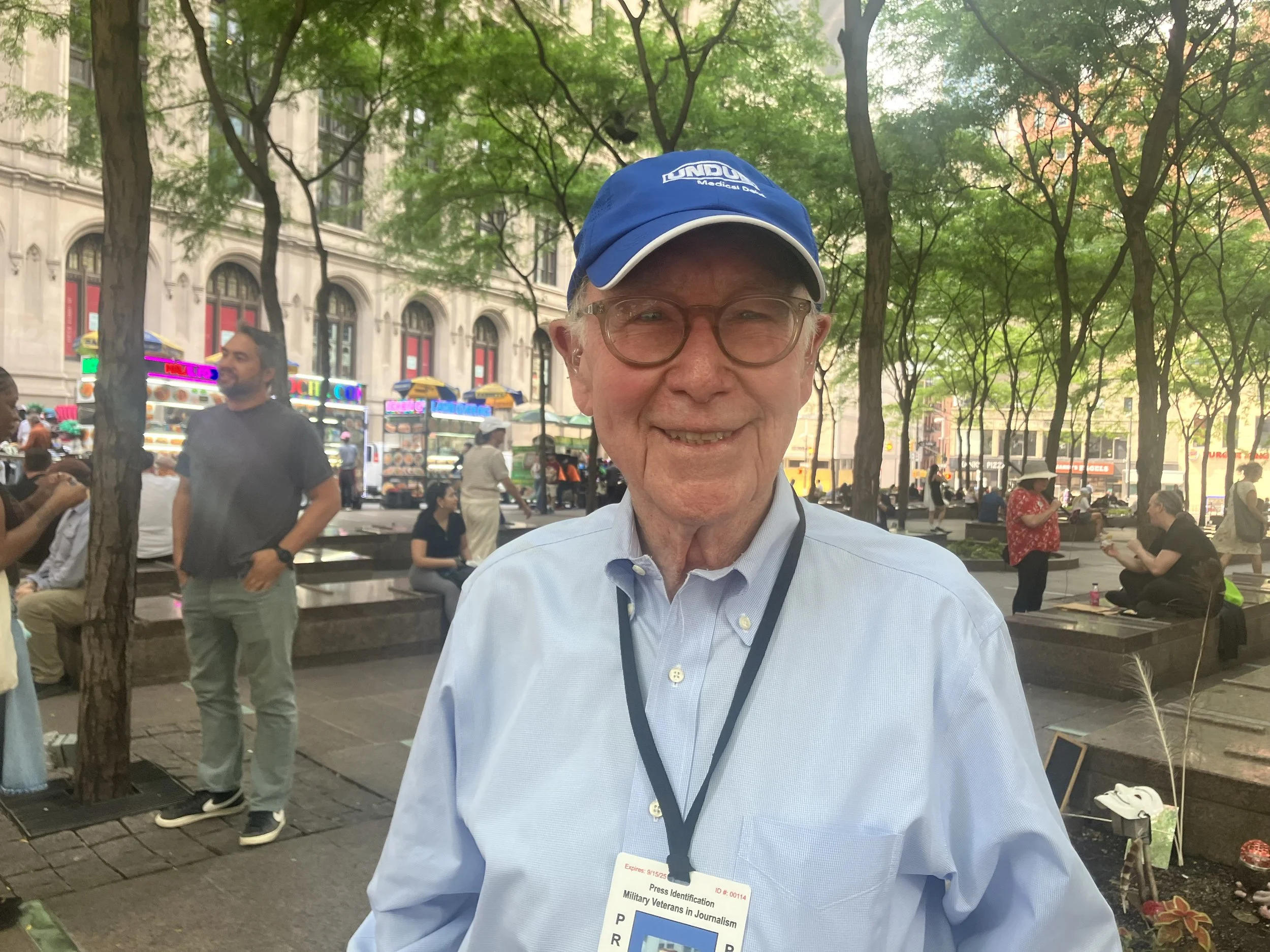
Jerry Ashton in Zuccotti Park this week to mark the 15th Anniversary of the Occupy Wall Street movement.
Today, many of the “99%” that Zuccotti Park protesters helped to inspire 15 years ago are still marching and protesting—despite Occupy’s lesson about mass spectacles failing to yield political concessions.
There have been three nationwide “No Kings” marches across the United States in opposition to the Trump regime’s lawless authoritarianism since last year. The next one is slated for October 17, ahead of the midterm elections.
Back in 2011, wealthy “1%” patrons stood on the balcony at Cipriani Wall Street during the first day of the Occupy Wall Street movement sipping drinks and openly mocking protestors on the streets below calling for an end to U.S. inequality.
The occupation of Zuccotti Park lasted just short of two months before Billionaire Mayor Michael Bloomberg ultimately ordered NYPD cops in riot gear to forcibly clear out Zuccotti Park after a 59-day occupation on Nov. 11, 2011.
He justified the order saying in part that the green space bounded by Broadway and Trinity Place and its widest, and Cedar and Liberty streets at is narrowest, needed to be cleaned.
Sanitation crews then moved in to haul off what was left of the Zuccotti Park encampment and power blast the grounds. The implication was clear: Occupy Wall Street protesters and the rest of the “99%” were a dirty stain on the city that needed to be cleansed.
Freeborn is right. Occupy Wall Street did not yield any political concessions. U.S. inequality is worst than ever and the latest U.S. war in the Middle East with all its apocalyptic associations could be the end of us all before we know it. But all these years later, Ashton said on Thursday that he still has reason to hope.
“People are finally doing that horrible, horrible thing called waking up,” he said. “The more that people learn how to ally together, work on different parts of the problem, but support each other while we’re doing it—we have a lot to hope for.”
Ashton walked into Occupy Wall Street 15 years ago as a 74-year-old veteran of the collections and credit industry—and somehow walked out a debt forgiver.
“That does not happen except in movies,” he said. “That’s a fantasy.”
Following his experiences at Zuccotti Park, Ashton had a hand in helping to launch two organizations—RIP Medical Debt [now Undue Medical Debt] and Strike Debt’s Rolling Jubilee initiative.
Those two efforts, according to Ashton have abolished billions of dollars in medical and student loan debt for millions of Americans since their inception.
“Not bad for an organization that came out of a bunch of people who didn't know what they were talking about,” he said.
Ashton looks around in 2026 and sees the Occupy Wall Street movement “in the DNA of every organization that exists today fighting for the rights we have, fighting against authoritarian government.”
But he also knows much more needs to be done, too. And it all starts with some old fashioned union-style solidarity.
“We need more people to get out of their soft seats and get down onto the field,” he continued. “This is where change is made—not by signing petitions. Get your tail down to places like Zuccotti Park. You’ve got wonderful people in your town. Pay attention to them. Find them. Start working with them. They won’t be able to stop us.”