
Revolution Passed Down From Father to Son—And Now, to You
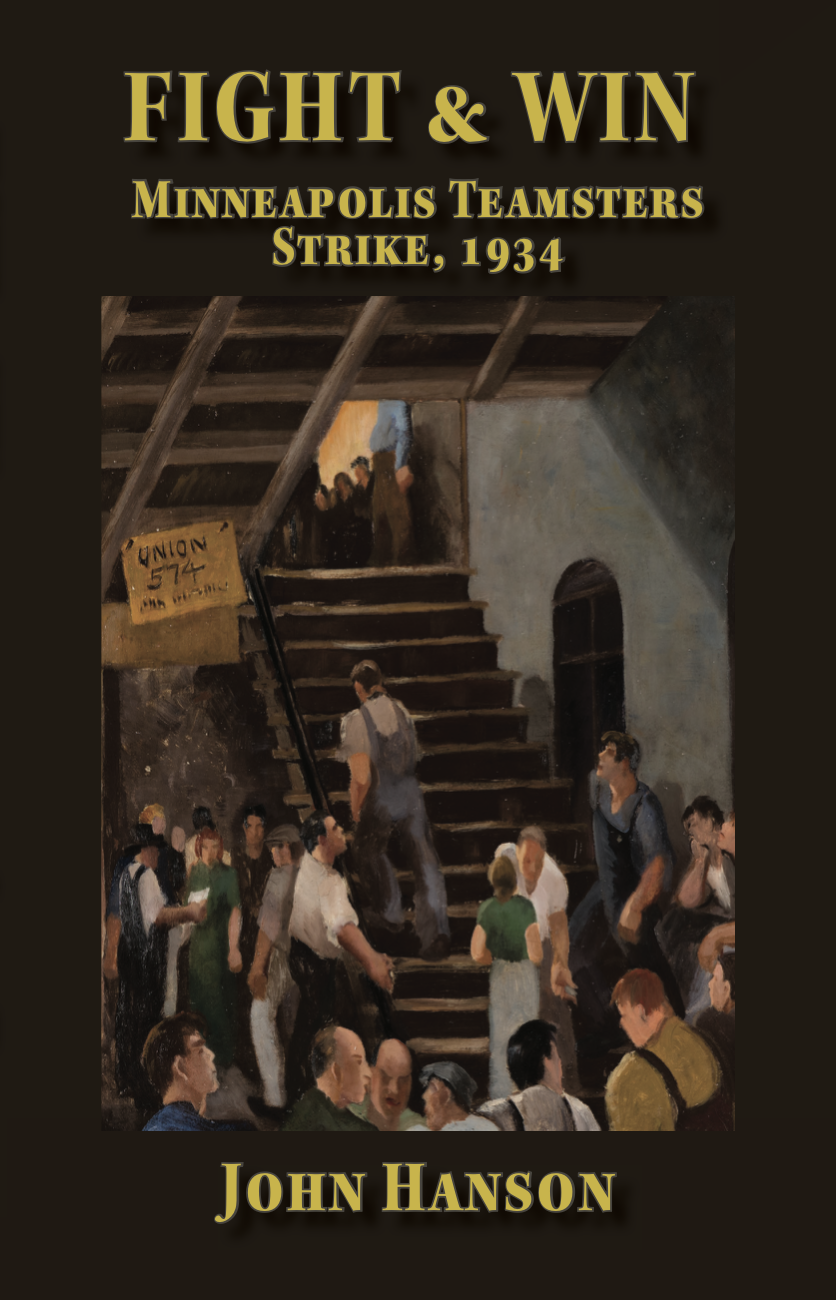
Fight & Win Minneapolis Teamsters Strike, 1934 is out now from Hard Ball Press.
By Joe Maniscalco
From the time he was 12 until he was 21-years-old, Author John Hanson grew up hearing first-hand accounts about the 1934 Minneapolis general strike from his dad, an old time Wobbly and member of IBT Local 574’s Committee of 100 tasked with guiding the historic worker uprising to ultimate victory.
The older Hanson told his son all about the shotgun-wielding cops, Citizens Alliance goons, National Guardsmen, and courageous Minneapolis workers—both men and women alike—who risked all for something better than the meager wages that left them feeling like slaves to their masters during the depths of the Great Depression.
“While recounting the story in 1960, Dad took a deep breath, and the suspense grew,” Hanson writes. “I sensed that he was reliving the moment and wished to describe the setting as though he were painting an accurate picture of the scene. I could picture the events because he took me to the Market District. While driving to the sites, Dad whistled, ‘Solidarity Forever.’”
Young John Hanson remembered all of those accounts from his father—and now years later, has written them down and published them in Fight & Win Minneapolis Teamsters Strike, 1934 from Hard Ball Press. In doing so, Hanson has preserved a vital piece of oral history that is both indispensable and intimate. Through his dad’s stories we understand the inner dynamics of the 1934 strike that shook the entire country nearly a century ago in stunning clarity seen nowhere else.
It’s all here in candid detail, how capitalist economics forced Hanson’s dad, and multitudes of men like him, off family farms and onto the rails in a desperate search for work, and how many, Hanson’s dad included, eventually found themselves in big city’s all across America—cold, miserly places where hard work and dedication continued to be rewarded with poverty and indifference from the bosses.
By 1934, Hanson’s dad was driving a coal truck, choking back black dust in the dead of winter, just before things started popping off in Minneapolis’ Market District.
“Minneapolis entered 1934 with the business owners and manufacturers feeling optimistic,” Hanson writes. “They had weathered the worst of the early Depression storm and were doing better than in many other cities. For them, a sense of ‘normal recovery’ filled the air, but they did not sense the frustration, exhaustion, hardship, and poverty of the employees and the unemployed. The social scales were in severe imbalance, threatening a civil conflict that could come at any time.”
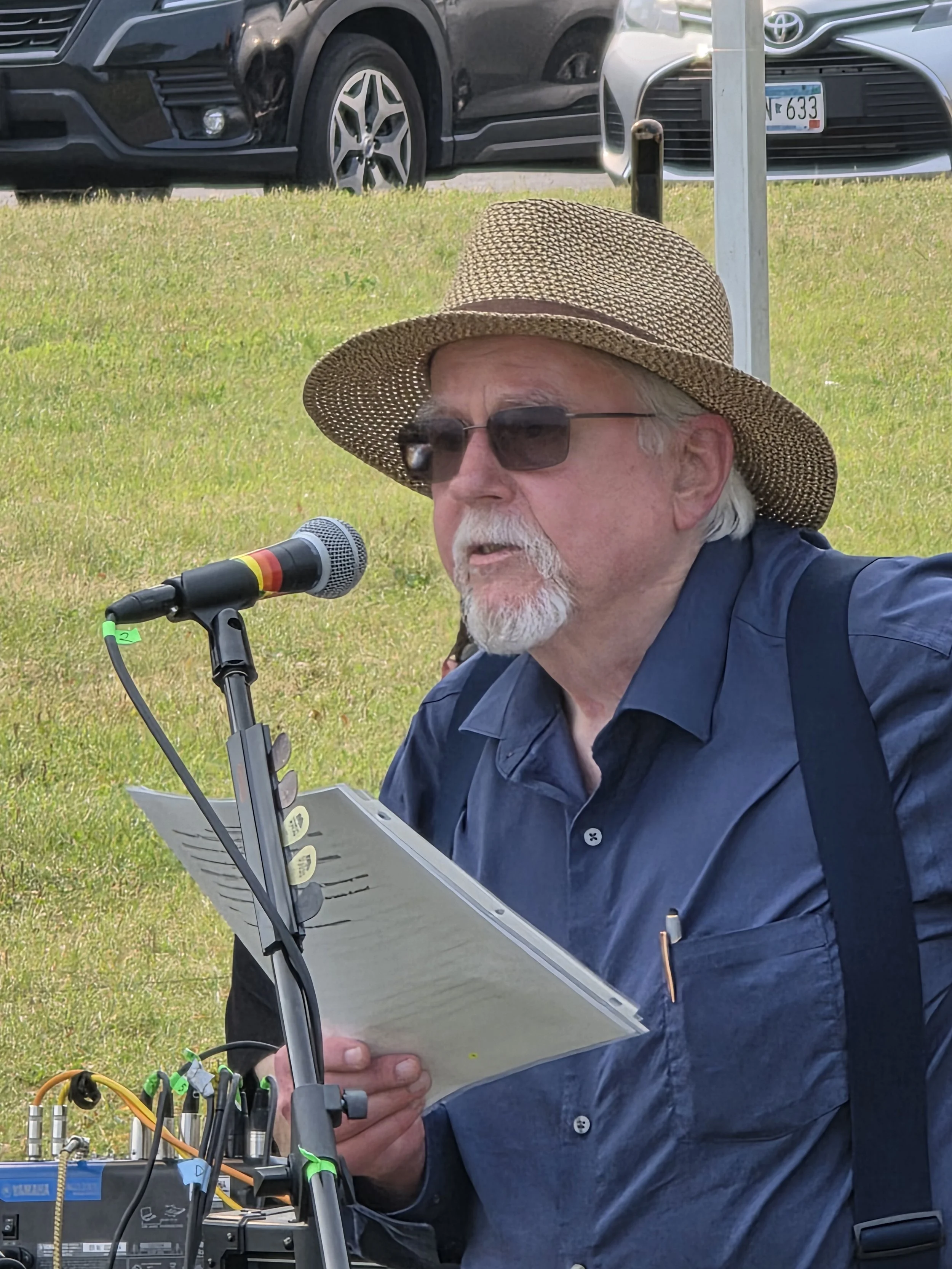
John Hanson’s father was a member of the Committee of 100 during the Minneapolis general strike of 1934.
What came next was a series of highly coordinated mass mobilizations on a scale seldom seen before or since in American history—and at a time when most didn’t even have telephones in their homes, let alone in their pockets.
Hanson’s on-the-ground accounts of how Local 574 and its many allies defty deployed “flying pickets” to evade the cops and hunt down scab coal truck drivers to preserve the strike’s integrity are as awe-inspiring as they are harrowing.
“The Strike Committee members relayed instructions and reports to front-line picketers, roving picketers, and a multitude of supporters in different locations,” Hanson writes. “This method garnered prompt and consistent responses for the actions of the day. Some days, the message was to continue providing resolute picketing throughout the city. Picketers became well-trained at facing the thugs and police. Instructions would go out: ‘Hold the line! No trucks will move!’”
Women, as Hanson’s continuously intriguing chronicle details, were integral to the 1934 Minneapolis general strike, leading marches, rendering aid, cooking food, gathering intelligence, and beating back the goons themselves.
The Committee of 100, Hanson relates, “quickly realized that the true leaders on the ground were women, who had long organized marches for the poor. Out of their dedication grew a Women’s Auxiliary, formed by the wives and close friends of union members to strengthen the movement from within. The women in the Finnish Socialist Hall were quick to join. Together the strike committee and auxiliary leaders organized tasks and assignments as they planned equipping the headquarters and preparing strike operations.”
The power struggle between capital and labor that erupted on the streets of Minneapolis in 1934 would not end without bloody violence and death. Henry Ness, unarmed at the time of his shooting, was the first striker police gunned down in cold blood, dying on July 21, 1934 after doctors had removed 38 slugs from his body.
“A realization struck my father,” Hanson writes, “this horror could only be described as ‘murder for greed.’”
And that is perhaps the saddest and most important takeaway from Hanson’s Fight & Win Minneapolis Teamsters Strike, 1934. At any time during the roughly three-month-long ordeal that gripped the city of Minneapolis, business owners could have simply granted workers the living wage and dignified work they sought.
That’s all workers were demanding.
Instead, the bosses chose to arm the police and shoot workers dead to protect profits.
President Franklin Delano Roosevelt later said, "The test of our progress is not whether we add more to the abundance of those who have much; it is whether we provide enough for those who have too little.”
Today, the United States continues to fail that test. Hanson’s Fight & Win Minneapolis Teamsters Strike, 1934 reminds us all of a time when working class men and women refused to allow that failure to continue—and exactly how they acted together to turn the tide.
This is not some stodgy academic analysis, but rather simple, heartfelt stories passed down from a father to his son—and the authenticity is all the labor movement needs to understand where it’s been and where it needs to go.
Order your copies of Fight & Win Minneapolis Teamsters Strike, 1934 here.