
Labor Strikes Back Against Trump’s Assault on Federal Workers
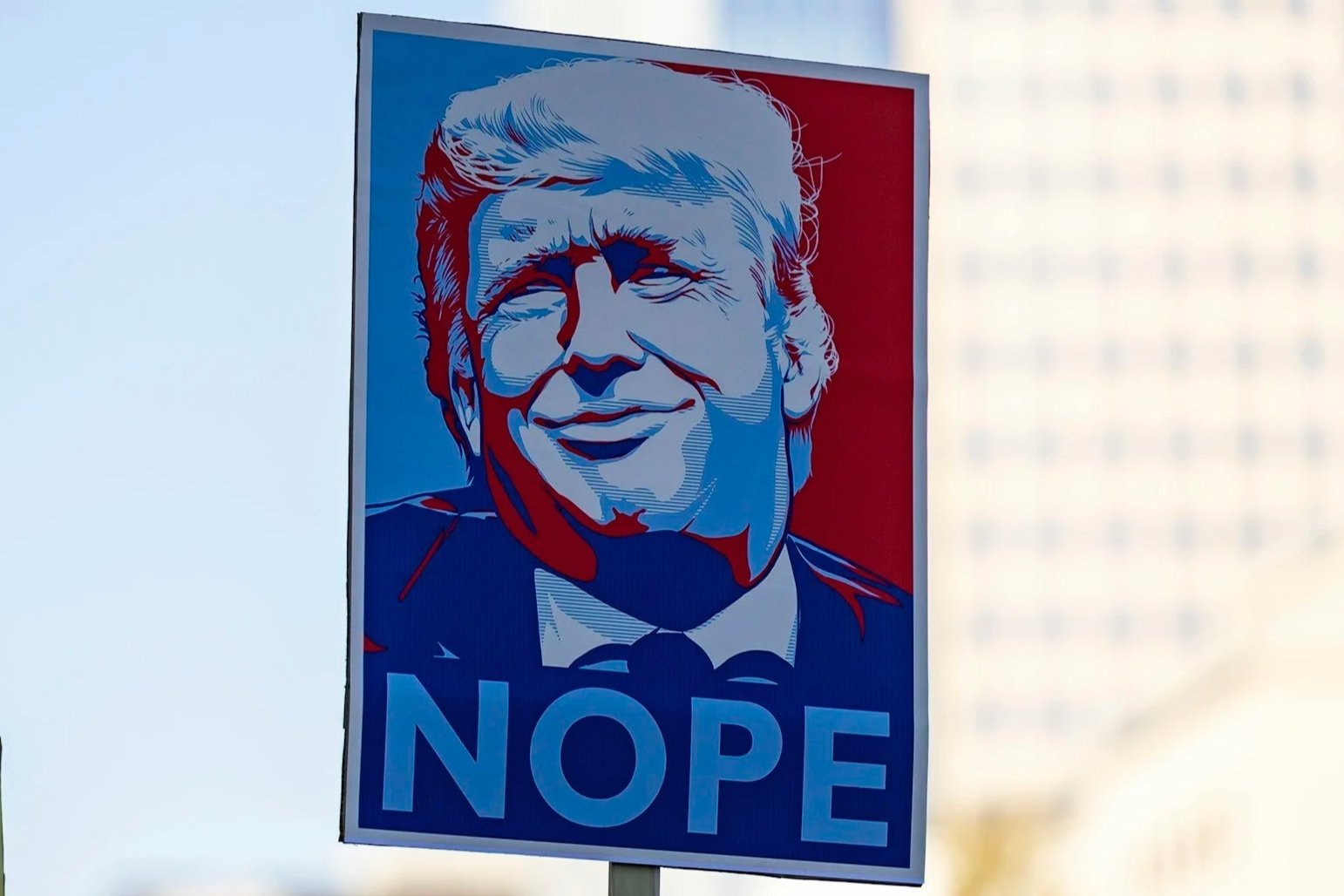
The Office of Personnel Management [OPM] under Donald Trump is trying to make it easier to fire federal workers—eight labor unions filed suit in court this week to stop it from happening.
By Steve Wishnia
Eight unions representing federal employees filed a lawsuit Aug. 24 challenging two rules recently imposed by the Office of Personnel Management (OPM), arguing that they would effectively eliminate the protections civil-service laws give workers against being fired without just cause.
The first rule would give OPM exclusive power to order agencies to terminate workers it decides are “unsuitable.” The second would prohibit workers from using union grievance procedures to challenge low performance ratings.
“Congress built the civil service on a simple principle—that public servants are hired, judged, and fired on merit, not on politics,” American Federation of Government Employees National President Everett Kelley said in a statement announcing the suit. “OPM does not have the authority to write those protections out of the law, and no statute gives it the sweeping power it has claimed here. OPM wants to fire people itself and then review its own decision. That is not accountability, and it is not what Congress wrote.”
The other unions in the suit, filed in federal court in San Francisco, are the American Federation of State, County and Municipal Employees (AFSCME), the National Federation of Federal Employees, the International Federation of Professional and Technical Engineers (IPFTE), and four AFGE locals in Northern California.
The “Suitability and Fitness” rule, which went into effect July 30, would give OPM’s director the power to order agencies to fire employees it deemed unsuitable. It says that the President “delegated this authority to OPM” in a March 2025 memorandum, which said that the office’s director had that power.
OPM previously only oversaw suitability standards for job applicants, and did not have the power to dismiss those already hired. While agencies would refer allegations to it, OPM now claims “sole jurisdiction” over suitability dismissals, and estimates that they will become half of actions to remove federal employees.
Chapter 75 of the Civil Service Reform Act of 1978, the lawsuit notes, allows federal agencies to take disciplinary actions such as dismissal “only for such cause as will promote the efficiency of the service.”
“There are no publicly released requirements or standards for determining who at OPM is authorized to make decisions regarding suitability actions, nor is that information public,” the lawsuit states. “OPM assumes authority that Congress has never granted it by statute to make disciplinary decisions (including termination) with respect to federal civil service employees based on OPM’s assessment of conduct during employment. Moreover, those decisions will be made by an unnamed set of individuals within OPM, using an opaque process that OPM itself will then purport to ‘review.’”
The Civil Service Reform Act, in Chapter 75, gives employees the right to appeal dismissals to the Merit Systems Protection Board, and to challenge that board’s decisions in federal appeals courts.
But another new rule, which will go into effect Sept. 2, says that employees can only appeal dismissals on “suitability” grounds to OPM.
“It is hard to imagine a scheme that is more contrary to Congress’ design,” the lawsuit argues. “Because the factors OPM will employ to make these suitability decisions are broad and subjective, they can readily be applied for political reasons or otherwise in bad faith, in a manner that Chapter 75 adverse actions were deliberately meant to avoid.”
Ending grievance procedures
The second rule, “Performance Appraisal,” which went into effect Aug. 6, changes the system of rating employees’ performance from a five-level system (from 1, “unacceptable,” to 5, “outstanding”) to a “standardized distribution.” That would give OPM the power to specify what percentage of workers could receive each level of rating. OPM says it intends to do that for only the two highest ratings, which it argues are inflated, but the text of the regulation says it applies to “some or all rating levels.”
The Civil Service Reform Act, the lawsuit says, states that performance standards must, “to the maximum extent feasible, permit the accurate evaluation of job performance on the basis of objective criteria.” Ranking employees on a “forced curve,” it argues, means objective criteria “will no longer be the sole basis of evaluations.”
The rule also removes the requirement that Level 1 ratings must be reviewed by a higher-level supervisor, which the lawsuit calls “an important check against unsupported determinations of unacceptable performance.” And once current union contracts expire, it will prohibit workers from contesting their ratings through the grievance procedure.
OPM argues that neither of these provisions deprive workers of due process, because a low “rating by itself does not remove an employee from Federal service.”
‘Everybody should be at-will employees’
The background of all this, the lawsuit declares, is that the Trump administration “has politicized OPM in an unprecedented manner and used it to carry out many of [its] most dangerous efforts to politicize the civil service.”
Since January 2025, the administration has fired or laid off hundreds of thousands of federal workers, abrogated union contracts, eliminated or decimated agencies whose purpose it disagreed with, and proposed other rules to “streamline” dismissals. OPM director Scott Kupor, a former Silicon Valley venture-capital executive, told Bloomberg News in August 2025 that ideally, all federal workers “should be at-will employees, frankly.”
In June, Trump issued an executive order that converted 8,000 people in senior positions to at-will employees. Kupor told reporters at the time that the move was “a restoration, in our mind, of the democratic process,” because it would make it easy to fire civil servants who questioned Trump’s directives.
The new suitability and performance-appraisal rules, IFPTE President Matt Biggs said in a statement, “are yet another illegal continuation of their attacks on federal workers and the apolitical civil service, as they seek to eliminate long-held worker due-process rights while implementing a ‘fox guarding the henhouse’ employee appeal process.”