
Chelsea Public Housing Tenants Fighting Demolition Demand Meeting with Mayor Mamdani
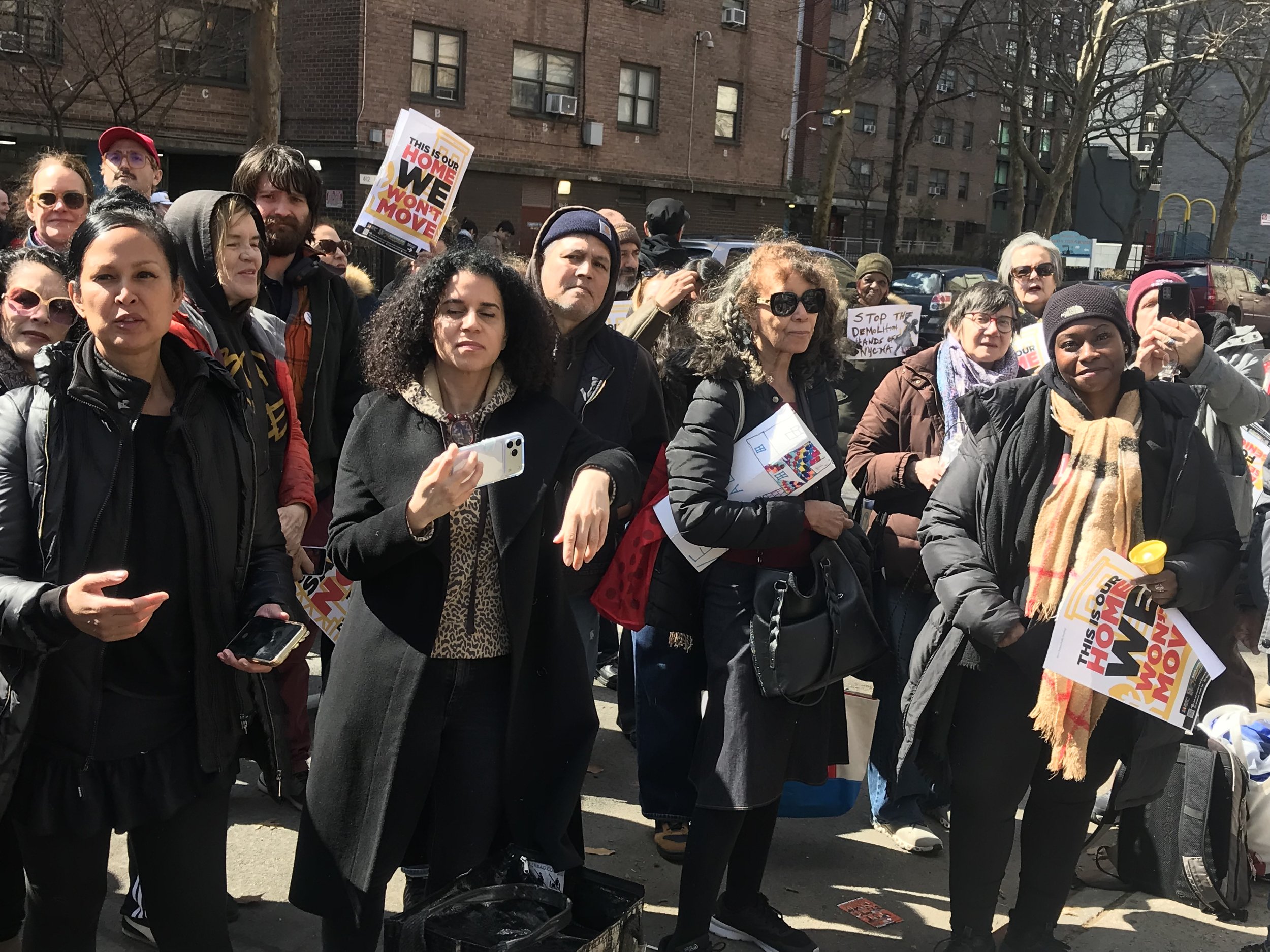
The fight against demolition that public housing tenants in Chelsea fought during Mayor Eric Adams’ tenure in office continues under new Mayor Zohran Mamdani’s administration. Photos/Steve Wishnia
By Steve Wishnia
“We are standing with the brave families who are resisting the pressure and refusing to leave their homes,” Elliott-Chelsea Houses resident Celines Miranda told a group of about 150 protesters outside 401-419 West 19th St. in Chelsea March 14.
The building, also known as Fulton 11, is one of the first two slated to be demolished under the New York City Housing Authority’s plan to privatize the Fulton and Elliott-Chelsea public-housing developments. Under the plan, the buildings would be turned over to two private developers, the Related Companies and Essence Development, and their more than 2,000 apartments torn down and replaced with a mix of 3,500 luxury apartments, 1,000 units of high-rent “affordable housing,” and Section 8 apartments to house the current residents.
The two projects would be the first ones completely demolished under NYCHA’s Rental Assistance Demonstration/Permanent Affordability Commitment Together (RAD/PACT) program. Over the past decade, NYCHA has privatized about one-seventh of the 178,000 apartments it owns.
“If we allow them to demolish these buildings, it will become the blueprint for the city,” Marquis Jenkins, the protest’s MC, warned the crowd of public-housing tenants, neighborhood residents, Democratic candidates campaigning, communist activists, and a few housing activists from as far as Crown Heights and Jamaica.
A state Appellate Division judge last month temporarily blocked NYCHA’s plans to close the deal with Related and Essence. A five-judge panel is currently reviewing that ruling, John Low-Beer, a lawyer representing residents opposed to the deal, told Work-Bites.
Meanwhile, only six of the 36 apartments in Fulton 11 are still occupied. Residents have received multiple notices warning that they had 90, 60, and then 30 days to leave before they would be evicted.
“They are putting the full press on these tenants,” Elliott-Chelsea resident association leader Renee Keitt said.
Jonathan Santiago, one of the remaining Fulton 11 residents, told the crowd that he and his mother had received a visit in December from Deputy Mayor of Housing Leila Bozorg, who was asking “why we haven’t signed the PACT deal.” The building’s incinerator has been shut down, he added.
Another resident, Maria Ayala, speaking in Spanish through a translator, said that she was told to go to the office and sign a new lease. She refused. Her family was also shown another apartment in poor condition and told if they didn’t accept it they’d be taken to court, she added.
NYCHA and representatives of the developers, Celines Miranda said, have been telling tenants “this is going to happen anyway, so you might as well sign and leave now.”
That’s illegal harassment, Thomas Hillgardner, another lawyer representing the tenants, told Work-Bites. He is planning to file harassment lawsuits on behalf of residents of both Fulton 11 and the Chelsea Addition senior-housing building, the other one facing demolition.
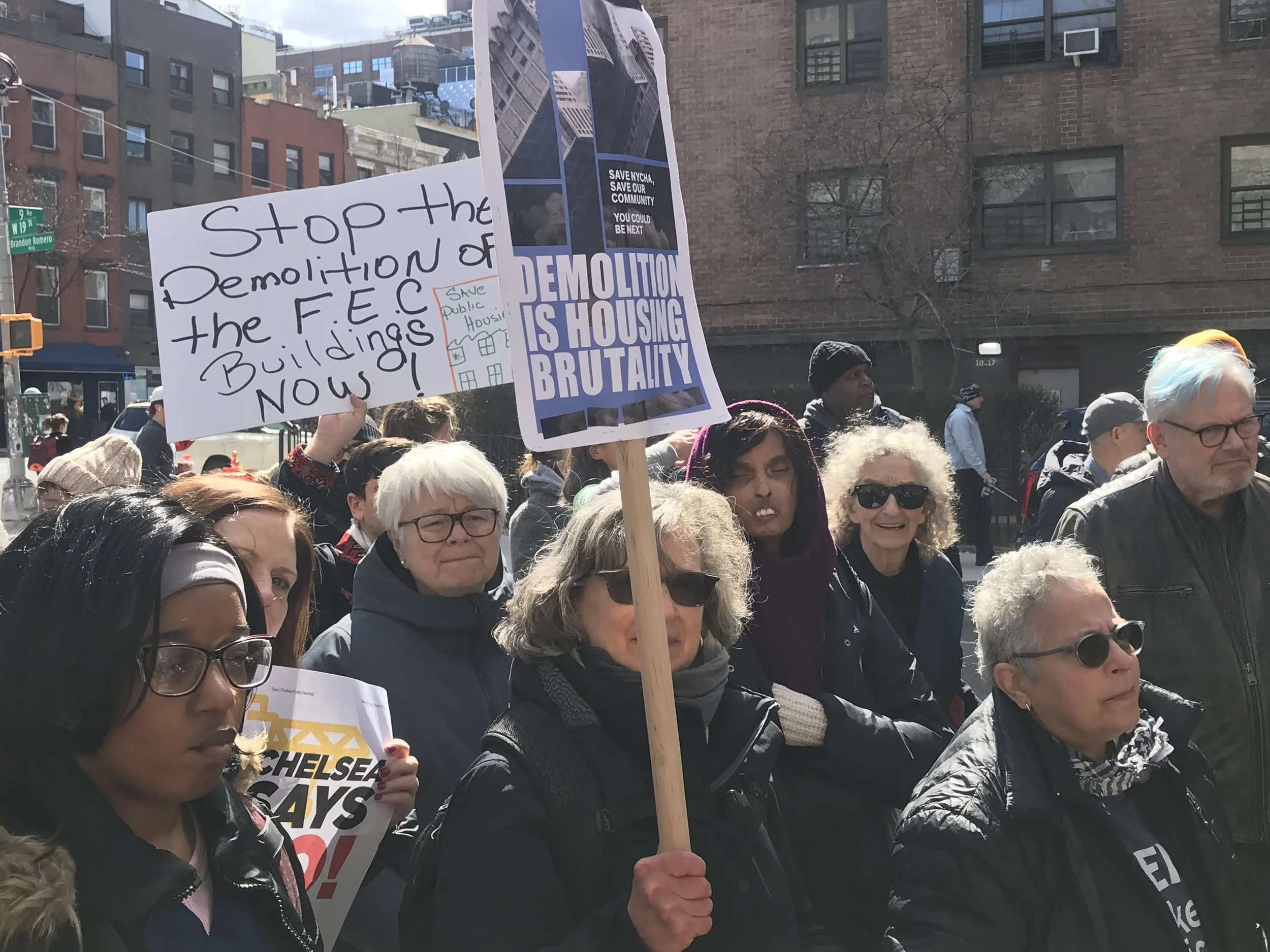
Chelsea public housing tenants and their supporters opposing demolition rally on West 19th Street in Manhattan Mar. 14.
The suit is “screaming to be brought by all the residents,” he said. “They lied to the tenants to get them to move.”
Federal housing regulations say tenants cannot be forced to relocate until the RAD/PACT conversion has been approved, Hillgardner explained. NYCHA told residents of the two buildings that they had to move by Oct. 26, and in November, it unsuccessfully sought a court order demanding that 18 of them accept relocation. But the Fulton conversion wasn’t approved until January, he said.
Gradual privatization
The city’s RAD/PACT program began under Mayor Bill de Blasio in 2016, in the belief that federal funding for public housing had been slashed so much that the only way to get money to make the huge backlog of repairs needed was to involve private developers. To do that, NYCHA developments would be converted from Section 9, traditional public housing, to Section 8, in which private companies manage them and collect rent, and the federal government pays the difference between 30% of the tenant’s income and the “fair market rent” for the area.
NYCHA currently receives around $1,600 a month per apartment in government subsidies, but Related would get about $2,400, says Marquis Jenkins, a longtime public-housing organizer based on the Lower East Side.
He calls the model “predatory.” Developers receive higher subsidies from the government, but “they are not bringing in their own capital,” he told Work-Bites. “They’re not in this because they care about public housing.”
People have been living in bad conditions for years, Jenkins says, so privatization can seem like a solution. But previous RAD/PACT developments haven’t shown that private owners are any better at managing them than NYCHA is. Residents still have consistent problems like mold and leaks, he added, and their communities are being destroyed.
NYCHA has privatized about 25,000 of its 177,500 apartments under RAD/PACT since 2016, when the 1,378-unit Ocean Bay Apartments (Bayside) in Edgemere, Queens was converted. Others include the Betances developments in Mott Haven, with more than 1,100 apartments; in 2021, the 1,620-unit Williamsburg Houses, the oldest public housing in Brooklyn; the 685 apartments in Harlem River I and Harlem River II in Manhattan; and, last December, the 1,610-unit Bay View Houses in Canarsie. More than 15,000 others, including those in Fulton and Elliott-Chelsea, are in the conversion process. NYCHA’s goal is over 60,000, more than one-third of its stock.
Dissatisfaction with Mamdani
“These buildings are not falling apart. We just want them to fix the damn buildings,” Fulton tenant activist Jackie Lara told the crowd. The most urgent problems, she added, are the plumbing and one elevator.
She then threw a Mamdani-for-Mayor T-shirt on the ground and stomped on it.
“Mamdani, you need to respect your elders,” Renee Keitt told the crowd. “You need to come here and meet with the tenants.”
The mayor’s press office did not respond to phone and email messages from Work-Bites.
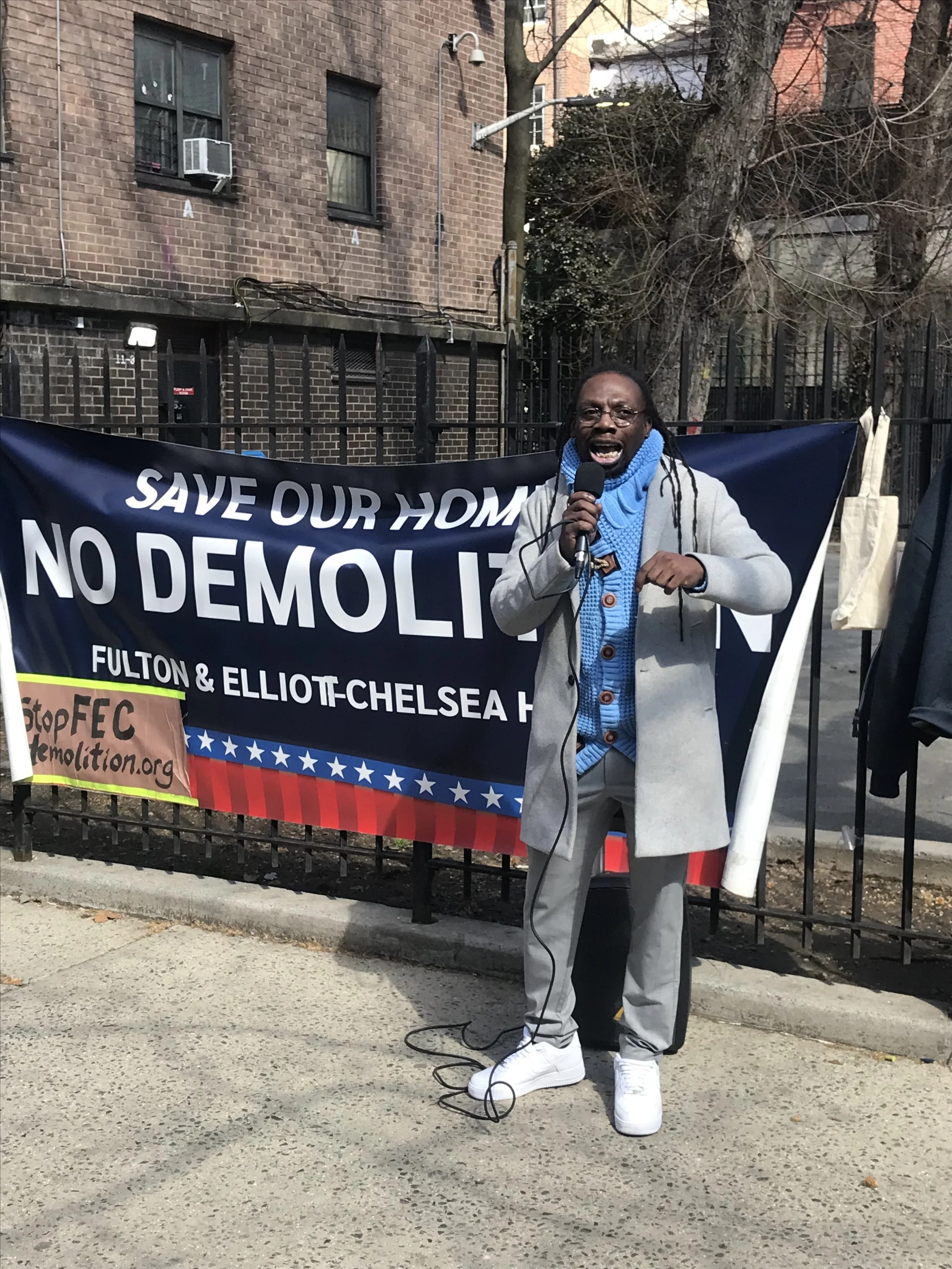
“If we allow them to demolish these buildings—it will become the blueprint for the city,” public housing activist Marquis Jenkins declares.
Layla Law-Gisiko, running for the neighborhood’s vacant City Council seat in the April 28 special election, said it was essential to “break the narrative that the only hope is privatization,” which she called “corporate socialism.” The idea that there’s no money for Section 9 public housing, she said, is “not a physical law. It’s disinvestment.”
“Do you know what it’s like for elderly people to move?” asked Jack Schlossberg, one of several candidates seeking the Democratic nomination to succeed Rep. Jerry Nadler.
Former Councilmember Tom Duane urged residents to keep an eye on the people who already moved out, to help them return. And he advised the ones who’ve stayed, if they don’t want to be forced out, “do not sign anything.”