Chilean Workers, Like Their U.S. Counterparts, Seek Revolutionary Change
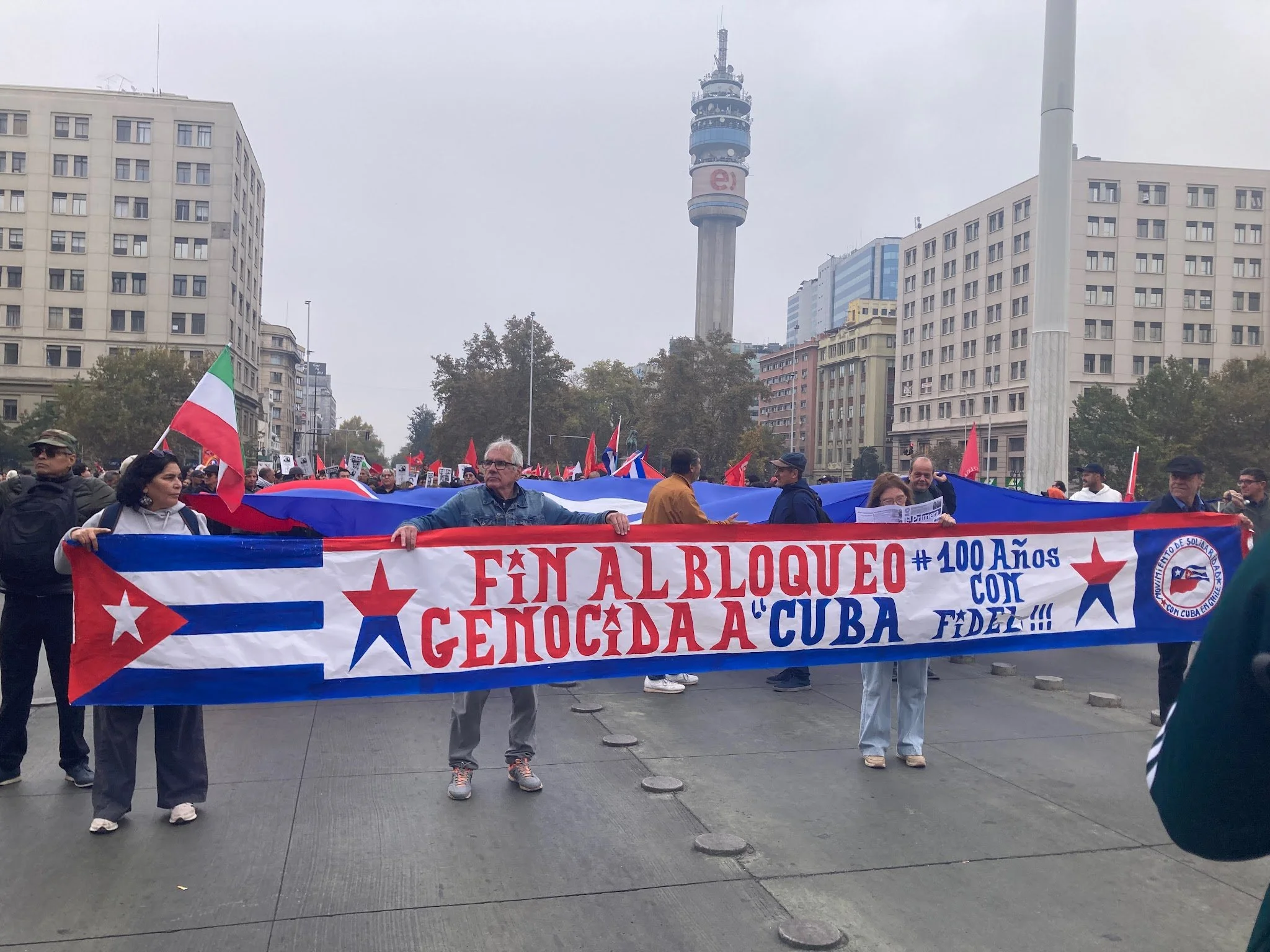
This sign written in Spanish translates as “End The Genocidal Blockade In Cuba” Photos/Eilean Faltin
Editor’s Note: Work-Bites contributor Eilean Faltin is currently traveling across South America where she filed this international report.
In Santiago, Chile, International Labor Day is celebrated with two parades. One procession is organized by CUT—the Central Unitaria de Trabajadores de Chile, which functions as the main negotiating body between workers and the government. This parade is protected by police barricades and runs more or less orderly down La Alameda—the main avenue of the city.
The other, unauthorized parade, is chiefly organized by CCTT—the Central Clasista de Trabajadores y Trabajadoras—an anti-capitalist labor federation that serves as a more radical alternative to the CUT. It is held a mile away, and this year was shut down after an hour by police using tear gas and water cannons.
Both parades reflect Chile’s complex realities on the ground and the nation’s conflicting view of Labor Day. While on the surface Chile appears democratic and prosperous, with many more worker organizations than its Latin American neighbors, it also finds itself in constant struggle against transnational imperialist forces.
It’s been that way in Chile ever since the 1973 U.S.-backed coup gave rise to Augusto Pinochet and his nearly 20-year dictatorial reign of violent repression when the nation’s economy was transformed into a neoliberal extractive model and tens of thousands of dissenters were terrorized and killed.
The Carabineros—the armed police force that helped carry out the bloody 1973 coup—is the same force that attacked CCTT marchers in this year’s Labor Day parade.
But anger at recently-elected right-wing President José Antonio Kast, son of late Nazi Party member Michael Kast, fueled both the latest CUT and CCTT parades.
The Kast administration, elected in December 2025, prioritizes the expansion of extractive industries like mining and forestry, largely driven by foreign investment, and has already seen to the removal of over 40 environmental oversight measures.
Additionally, they’ve proposed a 15% cut in the PGU—universal pension—as well as a slashing social programs by $30 billion pesos. Many student groups specifically oppose the discontinuation of Programa JUNAEB, which provides food, healthcare, and scholarships for students in public schools.
Kast’s government has also significantly reduced fuel subsidies, resulting in sharp increases in gasoline and diesel prices.
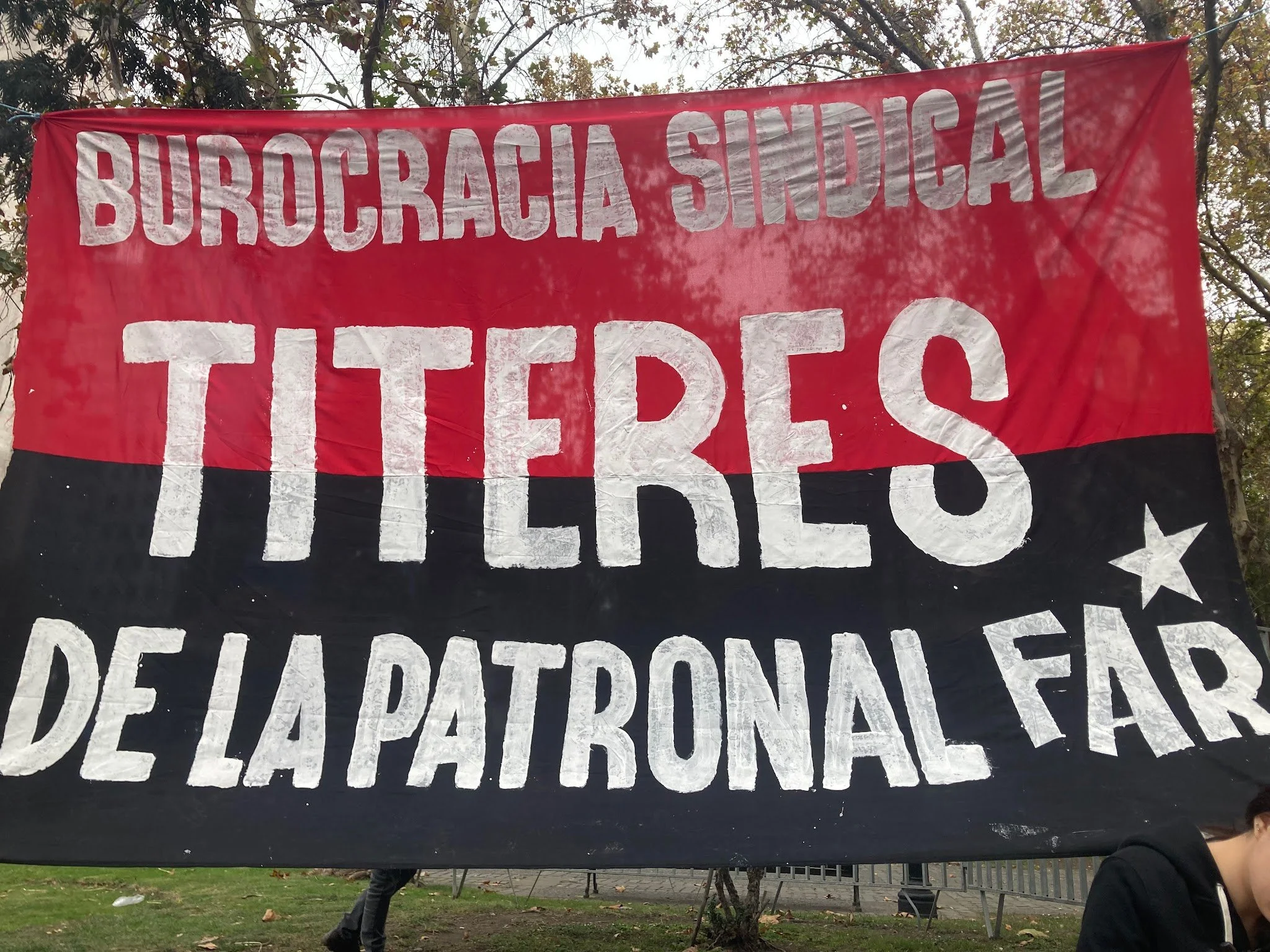
“Union Bureaucracy—Puppets Of Employers”
In the midst of these attacks on workers, some groups, like Socialismo Revolucionario, are pushing for a general strike. However, much like in the United States, they lack centralized organization and institutional support.
“We don’t have the power now to sustain a strike,” said one young Socialismo Revolucionario member marching on the outskirts of this year’s CCTT parade. “Unions are loyal to the government and corporations—we as workers need to force their hand, and threaten to leave these unions behind, so that they can meet the urgency of the situation.”
Many compare Kast to Donald Trump—both were elected advocating Christian nationalism and exploiting a fear of immigrants (in Chile’s case, primarily Venezuelans). Kast presents himself as staunchly “pro-life” and proposes building new mega-prisons in the name of law and order. But like Trump, many suspect that Kast’s actual motivations have little to do with his platform.
As one woman marching alone in this year’s CUT parade put it, “Leaders like Kast, Trump, and [Javier] Milei [Argentina’s far-right president] just want to hoard money and make shady deals with their rich friends.”
One organizer with MIT—International Worker’s Movement—suggested that Kast’s inauguration might open space for broader coalitions to form between unions, political parties, and other groups that may not have found common ground in the past.
The frustration isn’t just directed at Kast alone, but rather imperialism more broadly. At this year’s Labor Day parades, Chilean flags flew alongside those of Palestine, Cuba, and the Mapuche Nation—indigenous people of Chile.
Just 7 years ago, Chile stood on the brink of revolution. The estadillo social, or social outburst, was sparked in October 2019 by a small hike in subway fares, and lasted until the start of the COVID-19 pandemic in March 2020.
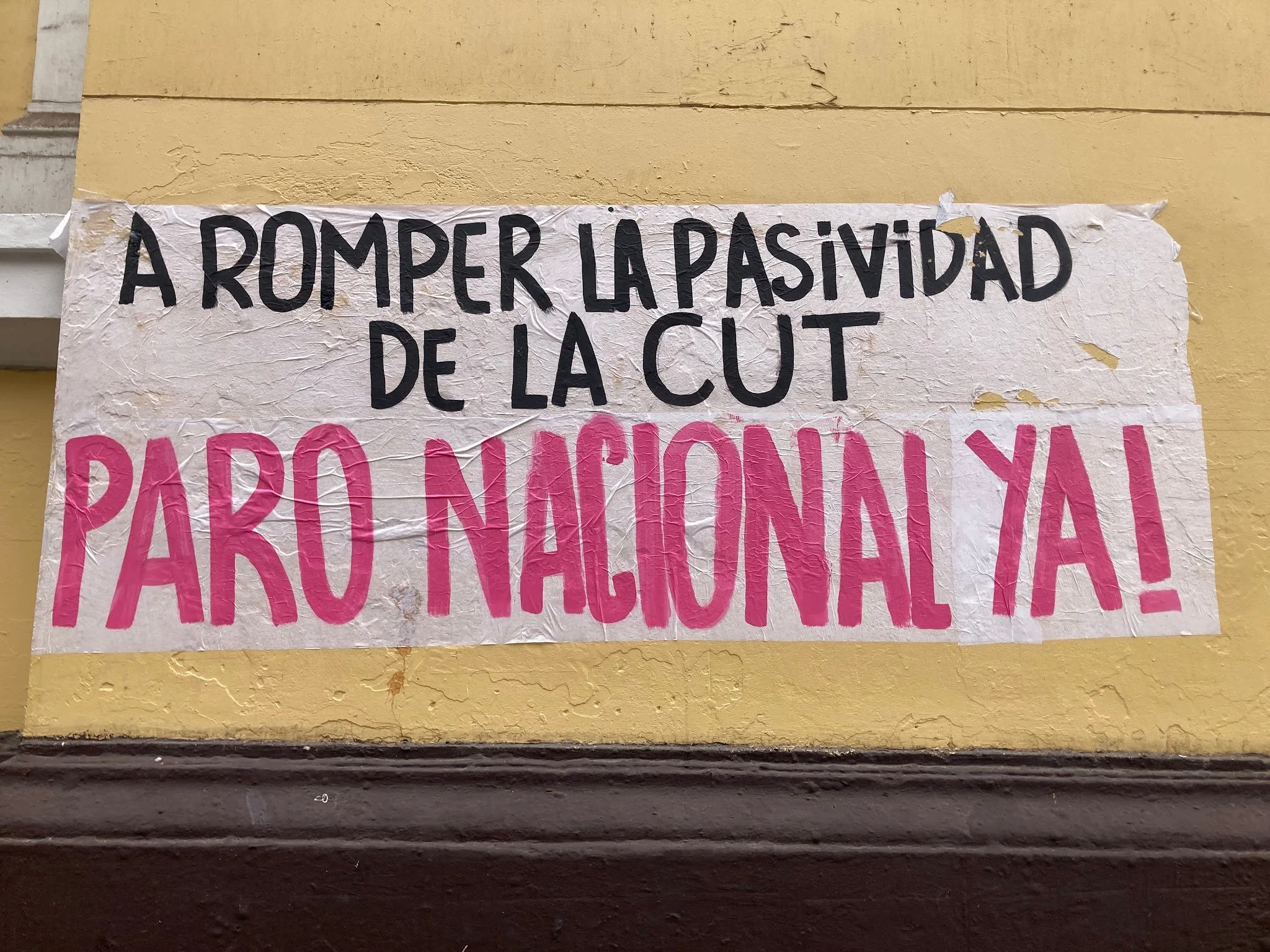
“Break the passivity of the CUT—National Strike Now!”
Protesters gathered in response to longstanding issues with the cost of living, lack of social services and governmental representation, as well as the oppression of women and indigenous peoples. In a largely leaderless and spontaneous manner, millions gathered across the country, organizing with social media, forming territorial committees and front lines.
On November 15, 2019, after a month of sustained action, during which 29 people were killed, nearly all political parties in the Chilean government voted to begin the process of replacing the 1980 constitution, originally drafted under Pinochet. The decision was supported by roughly 80% of voters.
After a two-year drafting process, two new constitutions were proposed and ultimately rejected by voters. Today, Chile retains the old Pinochet-era constitution.
Many Chileans, however, saw the constitutional drafting process as an effort to stifle revolution, rather than a genuine step towards change—and they continue to agitate.
Marchers in both this year’s CUT and CCTT Labor Day parades carried signs proclaiming, “¡Allende Vive!” or “Allende Lives!” referring to former socialist President Salvador Allende, who died during the 1973 coup.